
As Georgians debate education spending, a familiar argument against the Georgia Promise Scholarship has taken a new shape.
Why, critics ask, should the state spend $100 million for students to leave public schools when it set aside only $70 million for literacy coaches in public schools? It sounds like a hard-nosed question about priorities. It assumes every dollar spent on a scholarship is a dollar taken from a reading program.
That assumption is wrong.
Not only is Georgia paying for both, but the two programs are aimed at the same group of students. And a child who can’t read needs every option available.
Read about how the Promise Scholarship and educational literacy are compatible in this week’s commentary.
– Kyle Wingfield
Friday’s Freshest 🗞️

Previously, we examined how data centers use water and electricity, but another factor in data center development is land use, including what goes into decisions about where data centers are built, how sites are developed and how they affect surrounding properties. This piece examines how much land data centers use and the zoning requirements for them as well.
Since an ordinary law cannot override the state constitution, Georgians are often asked to vote on constitutional amendments when they enter the voting booth in November. In this article, we take a look at the three constitutional amendments on the ballot in Georgia this year.
Budget strain is a concern for Georgia businesses and households alike. No matter who occupies the governor’s mansion in 2027, one problem a new administration must address is the growing burden of regulations from the administrative state.
Georgia voters will choose a new governor, lieutenant governor and every state legislator this November, and many of those officials will face issues beyond the platforms that got them elected. The Foundation’s 2026 Guide to the Issues, marking 30 years since the first edition, offers recommendations on nine key issues for new leaders and voters alike.
Peach Picks 🍑

Gov. Kemp announced that Blue Bird Corporation (Blue Bird), a technology leader and innovator of school buses, is expanding its existing footprint in Peach County. The company plans to invest an estimated $300 million in a new manufacturing facility in Fort Valley, creating 375 new jobs over the next three years.
Hartsfield-Jackson Atlanta International Airport, often called a never-ending construction project, is entering an intensive period with plans to spend $1 million a day on construction work. One of the Atlanta airport’s biggest and most complex projects is its yearslong effort to expand Concourse D.
Implementing the next phase of the Columbus Ahead plan comes with a new price tag: $19.7 million, according to economic development officials. The Regional Prosperity Initiative (RPI) hosted “Ahead Together: The Roadmap to 2030” on Oct. 16, when officials outlined the implementation stage of Columbus Ahead, a five-year economic development strategy.
The Atlanta Regional Commission has released 10 “housing actions” in its first-ever Regional Housing Strategy, which sets a target of 367,000 new homes in the region by 2035. City and county targets are due in November.
Featured Publication📊

Georgia Pathways to Coverage, Gov. Brian Kemp’s alternative to full Medicaid expansion under the Affordable Care Act, is set to expire at the end of 2026. The Georgia Department of Community Health (DCH) announced a proposed extension in August 2026, asking the federal government to raise its share of Pathways costs from about 67%, the state’s traditional Medicaid match, to 90%.
This policy brief examines the current data and costs associated with Georgia Medicaid and provides an analysis of the landscape moving forward.
In the Media🌟
Foundation President and CEO Kyle Wingfield spoke at the Statesboro Bulloch Chamber’s State of the Region event on Tuesday, Oct. 20. His speech, featured in Grice Connect, a Statesboro and Bulloch County news outlet, challenged business and community leaders to take public concerns about growth seriously while continuing to create economic opportunities.
Quote of the Week🌟
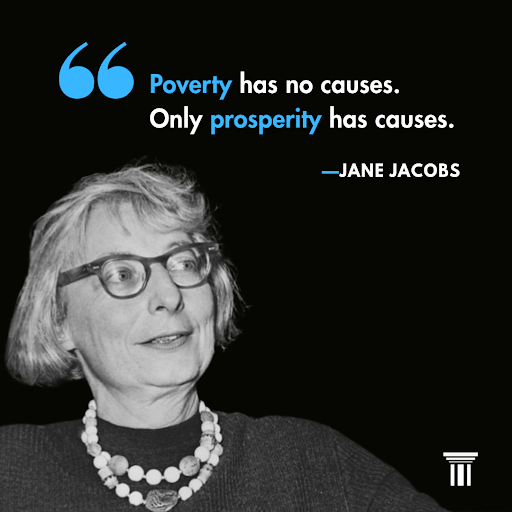
In The Economy of Cities (1969), Jane Jacobs argued that poverty needs no explanation. It’s the default, the way cold is the absence of heat. Prosperity is what has causes, and it comes from economies that keep adding new work.
That’s a useful test as Georgians head to the polls on Nov. 3. Whoever wins, the question to ask of any affordability plan is whether it clears the way for Georgians to build more homes, start more businesses and create more jobs, or whether it adds restrictions that make all three harder.

More Commentary
Literacy or Promise Scholarships? Georgia Doesn’t Have to Choose
The Three Constitutional Amendments on Georgia’s 2026 Ballot
To Tackle Affordability, Georgia’s Next Governor Should Start With Cutting Red Tape