
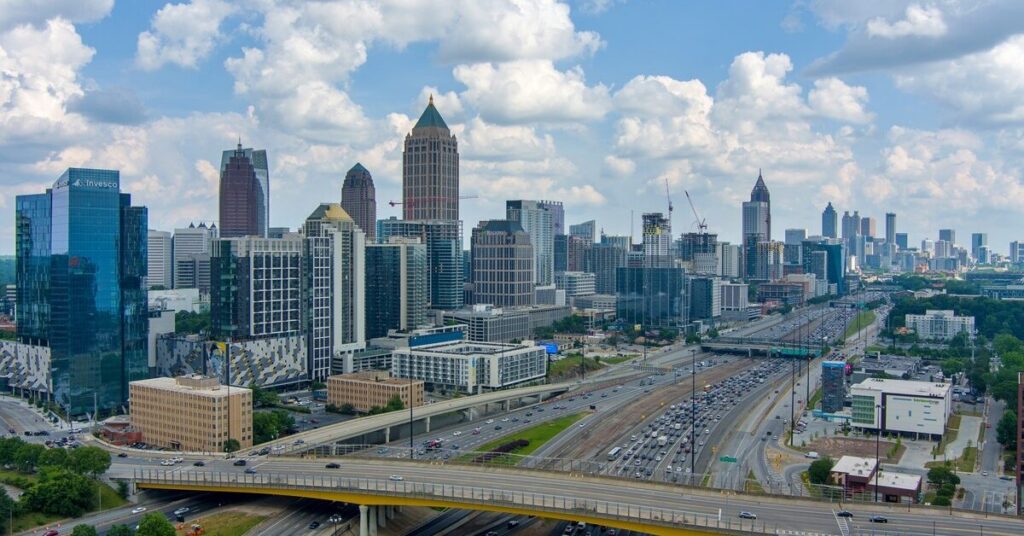
It’s just good manners to clean up when company’s coming.
The 23rd FIFA World Cup is an interesting backdrop for the United States’ 250th birthday. Soccer fans from around the world have descended upon America’s gas stations, chain restaurants and even such backwoods haunts as Jordan-Hare Stadium. They marvel, wide-eyed, at central air conditioning, free chips and salsa, the hunting section at Walmart and a number of other hallmarks of American cultural power.
Our guests’ experiences may offer some perspective on what we take for granted, but some Americans have taken a more cynical view of how much effort has gone into rolling out the proverbial red carpet, particularly in Atlanta.
Some Atlantans have expressed frustration that it seemingly took a major global sporting event to motivate the city into taking on necessary public works projects. This may be an exaggeration, but not an obscene one: The World Cup has motivated the city to concentrate deadlines, funding and attention on infrastructure work that residents have wanted for years.
Atlanta found out in June 2022 that it would be one of the World Cup’s 16 host cities. Its role became clearer in February 2024, when FIFA’s tournament schedule gave Atlanta eight matches, including a semifinal. A few months later, in October 2024, the Atlanta City Council approved a $120 million transportation infrastructure bond package for work in and around downtown and other high-traffic corridors.
Reporting at the time said the money would go toward resurfacing 25 miles of streets, restriping 200 intersections, installing 150 streetlights and repairing 14 miles of sidewalks on a two-year timeline.
City officials have noted that this work is directly related to World Cup preparation. In a recent update, the city described the bond as central to its effort to strengthen mobility, accessibility and safety “as it prepares for the demands of a global event.”
Invest Atlanta, the economic development authority for the city, also approved funding to help small businesses make interior and exterior improvements, activate vacant storefronts and prepare for the surge of visitors. MARTA, meanwhile, has rolled out a match-day transit plan, wayfinding support and station-specific preparations to move fans between the airport, downtown, the stadium and fan zones.
To be clear, not all of these projects came into being because of FIFA. Some were already planned and serve long-term development goals, but the tournament has been a clear accelerant. A deadline with this kind of attention makes infrastructural flaws and project delays more visible and embarrassing. And not all of the work has gone to plan, as demonstrated by MARTA’s inability to get its new railcars approved for passenger service before the tournament.
Atlanta residents certainly aren’t complaining about finally getting better sidewalks, clearer signage or brighter streets. The problem is that so many improvements apparently needed to welcome visitors are the same improvements residents have needed for years. The World Cup has created urgency among city officials that ordinary infrastructure work often lacks.
This raises a natural question: If Atlanta can organize this level of urgency for the World Cup, why is the ordinary pace of city government so much slower? When the city has a deadline it’s compelled to take seriously, as when masses of tourists show up with open mouths and full pockets, public work suddenly becomes more urgent and coordinated than when the audience is merely the taxpayers who live here.
For example, Atlanta already had a major voter-approved infrastructure agenda, “Moving Atlanta Forward,” a $750 million package approved in 2022 for transportation, parks, public facilities, public safety and other capital needs. But two years into what was presented as a five-year program, auditors found that less than 10% of project funds had been spent. A later review found more progress, but also noted that some projects scheduled to begin in 2024 still had not begun.
Moving Atlanta Forward is a broader undertaking, and isn’t a perfect comparison. However, the work specifically tied to the World Cup has had what ordinary infrastructure programs often lack: a concentrated geography, a defined project list, dedicated funding and a deadline everyone understands. These differences appear to have mattered because by June 2026, as Atlanta prepared for its first World Cup match, city transportation officials said they had completed 18 projects and were 98.9% finished before a tournament construction moratorium began. It’s no wonder that residents ask why ordinary projects, backed by taxpayer dollars and voter approval, do not carry the same sense of accountability.
For Atlantans concerned that the city waited until a large event to tackle infrastructure projects that should have already been completed, the situation isn’t quite as simple as that. Still, the quicker undertaking of such projects in time for the World Cup reveals something about public works: Deadlines matter, and transparency – in this case, the eyes of the entire world – is an excellent motivator to meet them.

More Commentary
The Three Constitutional Amendments on Georgia’s 2026 Ballot
To Tackle Affordability, Georgia’s Next Governor Should Start With Cutting Red Tape
Guide to the Issues 2026: Thirty years after the first edition