
Georgia experienced a political earthquake this week. Beware anyone who claims to know what happens next.
Close political observers are unsurprised that Keisha Lance Bottoms won the gubernatorial election, or that Democrats also won the state House. What seemed unfathomable just months earlier was clearly feasible by the closing stretch. Republicans’ keeping the state Senate was the only political “given” entering 2026 that ultimately proved correct.
It was the margins that were shocking. Since July, no poll in the Real Clear Politics average had shown Bottoms with more than a 2-point lead – a far cry from her 8.6-point rout of Republican Rick Jackson. Every other constitutional office followed suit, a clean sweep for Democrats.
We break down what this means for Georgia in this week’s commentary.
– Kyle Wingfield
Friday’s Freshest 🗞️

Why would so many people use AI if they didn’t believe it benefited their life in some way? As the argument goes, the more we outsource human activities to robots, the less human we become. But virtually every invention has outsourced some human activity to a machine.
Critics ask why Georgia should spend $100 million on Promise Scholarships when it set aside only $70 million for literacy coaches. But the state spends roughly $140 on public schools for every dollar it spends on Promise, and both programs are aimed at the same struggling readers.
Previously, we examined how data centers use water and electricity, but another factor in data center development is land use. This goes into decisions about where data centers are built, how sites are developed and how they affect surrounding properties.
Peach Picks 🍑

On Monday, Gov. Kemp announced that the Georgia Department of Revenue will begin distributing funds to local governments as part of the 2026 Homeowner Tax Relief Grant program this week, delivering property tax relief approved by the Governor and the Georgia General Assembly in the AFY2026 Budget.
As ballots were tallied across Georgia Tuesday night, voters approved three statewide constitutional amendments aimed at doubling farmland tax breaks, making probate judge elections nonpartisan and creating a dedicated emergency 911 fund.
Gov. Kemp announced Wednesday that he would not call a special session to push new political maps and curb the executive powers of future state leaders after the Democratic sweep in the 2026 midterms. “The voters of our state have spoken. As long as I’m governor, we will always respect the results of secure, accessible, and fair elections, and also abide by the laws and constitution of our state,” Kemp said.
Georgia’s congressional delegation will add four new members in 2027, but its 9-5 Republican majority won’t change. Jasmine Clark, Houston Gaines, John Cowan and Jim Kingston will join 10 incumbents who won on Nov. 3.
Featured Publication📊

Georgia Medicaid Expansion vs. Private-Plan Options: What Comes Next?
Georgia Pathways to Coverage, Gov. Brian Kemp’s alternative to full Medicaid expansion under the Affordable Care Act, is set to expire at the end of 2026. The Georgia Department of Community Health announced a proposed extension in August 2026, asking the federal government to raise its share of Pathways costs from about 67%, the state’s traditional Medicaid match, to 90%.
This policy brief examines the current data and costs associated with Georgia Medicaid and provides an analysis of the landscape moving forward.
In the Media🌟
New state projections show Georgia reaching 14 million residents by 2065, with far more seniors and a smaller share of children. President and CEO Kyle Wingfield told the AJC the shift will bring “massive culture change” and could prompt debates over how schools are funded. He also said an older population makes it more urgent to add residency slots and repeal certificate of need.
With Georgia Pathways set to expire at the end of the year, Georgia’s next governor faces major decisions about Medicaid. Director of Policy and Research Chris Denson told KFF Health News that private coverage may give Georgians “better access to see a primary care physician and other specialists” than Medicaid. He also said any alternative to full expansion that needs federal approval would likely take time.
Quote of the Week🌟
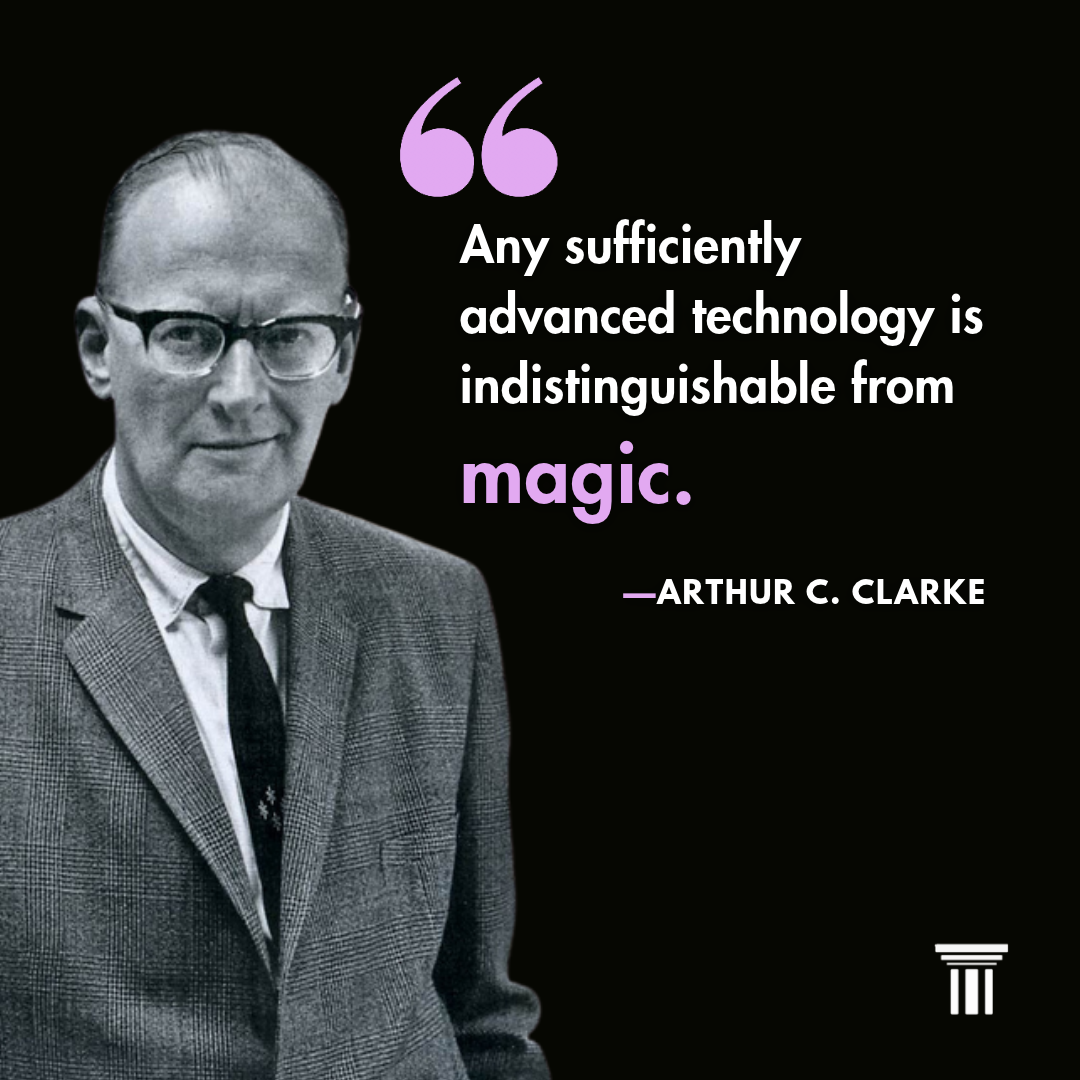
Arthur C. Clarke, the science fiction writer who predicted communications satellites two decades before they launched, understood something about technology: What looks like magic to one generation becomes ordinary to the next.
Running water once meant servants hauling buckets from the well. Hearing great music meant hiring musicians to play in your home. For much of history, only the wealthy enjoyed those comforts. Then technology put them within reach of nearly everyone, and today we barely notice them.
Artificial intelligence is following the same path. A chatbot can plan meals, sort through research or explain a dense document in seconds, the kind of help the wealthy have long paid for. Millions of Americans now use it every day, at home and on the job.
New technology will always stir anxiety. But history suggests the best way to spread its benefits is to let people choose for themselves, and let competition, not regulators, shape what comes next.

More Commentary
Divided Government Comes to Georgia
Who’s Afraid of AI?
Literacy or Promise Scholarships? Georgia Doesn’t Have to Choose