
Early voting is underway, and at the end of the ballot Georgians will find three questions about changing the state constitution.
It’s easy to skip past them, but a constitutional amendment outranks any ordinary law, and only voters can approve one. Georgians have done so more than 90 times since the current constitution was adopted in 1983. This year’s three proposals touch on how much land can qualify for lower property taxes, how probate judges are elected and how the state pays for 9-1-1 upgrades.
A few minutes of reading now beats a surprise in the booth.
Read more about what’s on your ballot in this week’s commentary.
– Kyle Wingfield
Friday’s Freshest 🗞️

Budget strain is a concern for Georgia businesses and households alike. No matter who occupies the governor’s mansion in 2027, one problem a new administration must address is the growing burden of regulations from the administrative state.
As data centers drive up electricity demand, Georgia needs to make sure households and other businesses aren’t left paying for the infrastructure those facilities require. Communities also deserve to know how much power these facilities actually use.
Georgia Pathways, the state’s alternative to full Medicaid expansion, is set to expire at the end of 2026, leaving the next governor with a major decision. Our new policy brief explains who Medicaid covers today, how recent federal changes affect the program and what expansion would cost the state.
Georgia voters will choose a new governor, lieutenant governor and every state legislator this November, and many of those officials will face issues beyond the platforms that got them elected. The Foundation’s 2026 Guide to the Issues, marking 30 years since the first edition, offers recommendations on nine key issues for new leaders and voters alike.
Peach Picks 🍑

A private consortium will pay Georgia a record $23.6 billion to build and operate toll lanes on the eastern top of I-285 for 50 years. The Top End Mobility Group will also cover the $8.9 billion design and construction cost and reimburse the state $515 million in costs to date, with construction starting in 2028 and the first lanes opening in 2034.
Georgia’s Supreme Court struck down Chatham County’s fire service fee, and the ruling could push more fire costs onto property taxpayers. The county must refund about $30 million with interest in the class-action case, and the decision could affect fees in other counties.
Georgia’s September net tax collections rose 2.3% to $3.34 billion. Year to date, collections are up 2.9%, or $240.2 million, over the same point last year.
VDL Groep will invest $77 million to expand in Hall County and create about 120 jobs. The Dutch engineering and equipment manufacturer already operates VDL Industries Gainesville there.
The Army Corps approved the permit for Savannah’s new container terminal after a three-year review. The Ports Authority plans to grow the Savannah gateway to 12 million TEUs.
Featured Publication📊
Georgia Pathways to Coverage, Gov. Brian Kemp’s alternative to full Medicaid expansion under the Affordable Care Act, is set to expire at the end of 2026. The Georgia Department of Community Health (DCH) announced a proposed extension in August 2026, asking the federal government to raise its share of Pathways costs from about 67%, the state’s traditional Medicaid match, to 90%.
This policy brief examines the current data and costs associated with Georgia Medicaid and provides an analysis of the landscape moving forward.
In the Media🌟
Policy Analyst J. Thomas Perdue’s commentary was republished by the Foundation for Economic Education. In the piece, Perdue offers recommendations for how the next governor can reduce regulatory costs that harm affordability.
Quote of the Week🌟
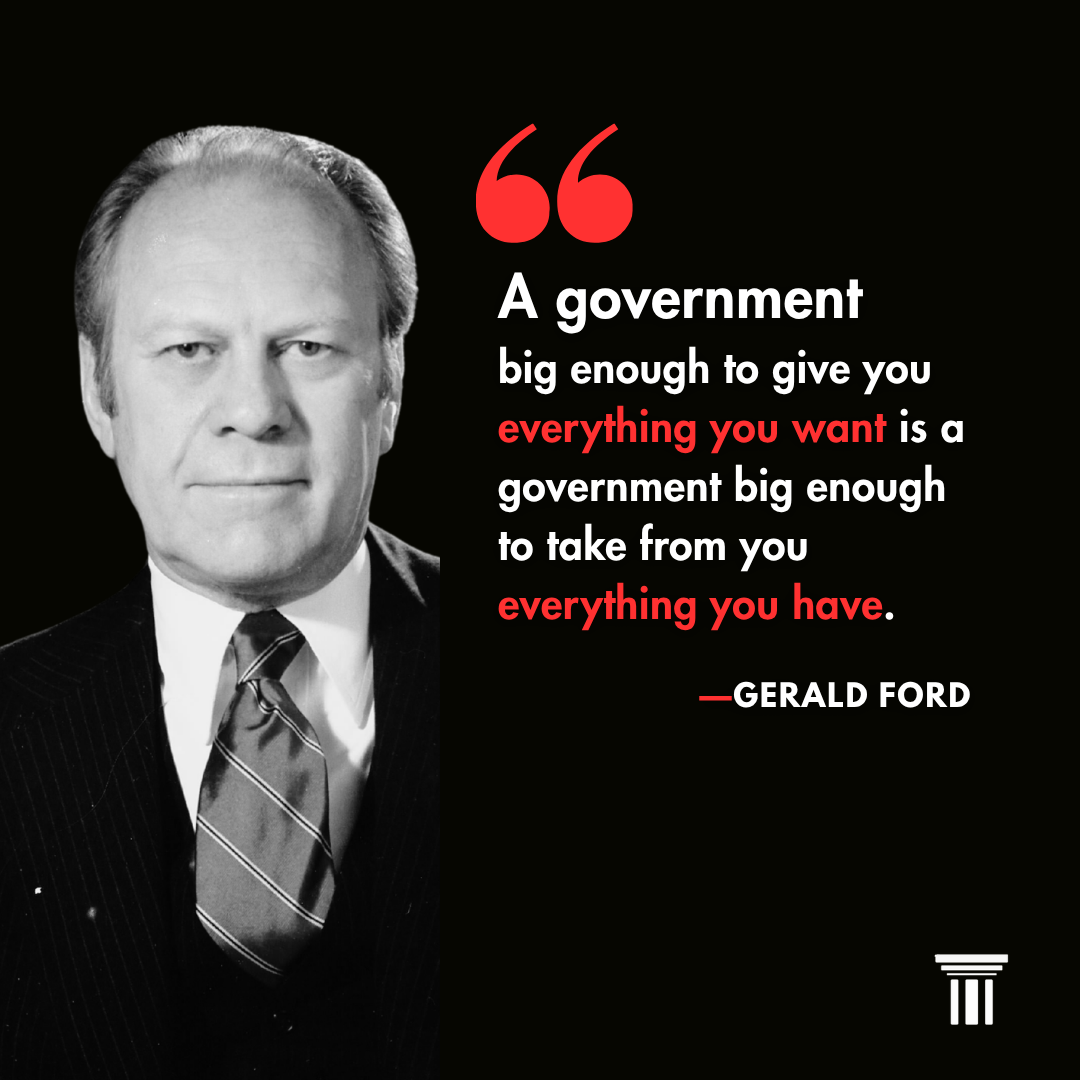
“A government big enough to give you everything you want is a government big enough to take from you everything you have.”
President Gerald Ford told Congress this on August 12, 1974, three days after taking office. Fifty-two years later, it still describes the trade-off at the heart of every budget debate.
Promises of relief, benefits and programs sound generous, but each one is funded by taxpayers, and a government able to fund them all is a government able to claim a great deal in return. That is why limits matter: spending caps, funds that return tax surpluses through lower income tax rates, levy limits that keep property tax bills from rising and rules that keep regulators accountable.
Ford’s warning is a useful test: Ask not only what government can provide, but what government must take to pay for it.
More Commentary
The Three Constitutional Amendments on Georgia’s 2026 Ballot
To Tackle Affordability, Georgia’s Next Governor Should Start With Cutting Red Tape
Guide to the Issues 2026: Thirty years after the first edition