
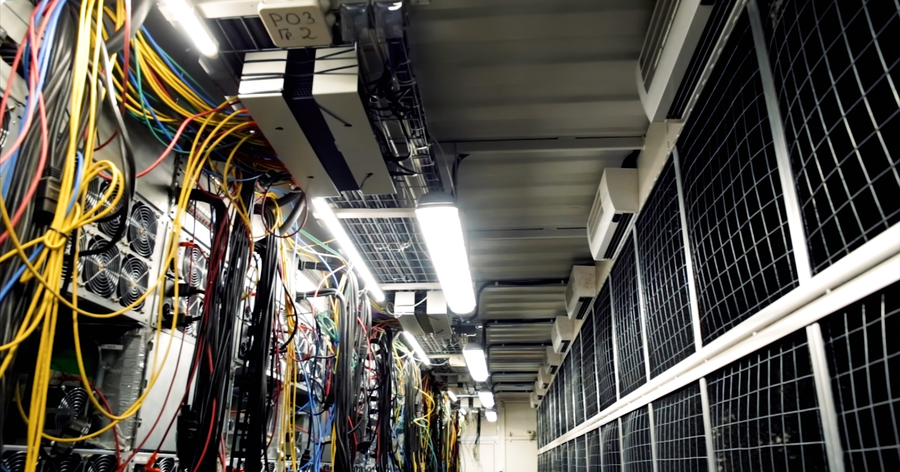
Data centers are frequently criticized for their consumption of resources. As discussed in our examination of water use, a facility’s size and cooling design can substantially affect its needs and its impact on local supplies. Another issue is energy use, which raises a different set of questions and challenges. Data centers facilitate services that are critical across the digital economy as well as in our daily lives. They have become a necessary piece of infrastructure, but it is important to have an accurate view of the scale and implications of their resource consumption.
Inside a data center, electricity powers the servers that process information, the equipment that stores it and the networks that move it between computers and users. Cooling systems also require electricity to remove the heat that equipment produces. Many of the services these facilities support must remain available around the clock, so their electricity needs continue after a typical business closes for the day.
Those needs vary substantially by facility. A smaller data center obviously operates at a different scale from a campus supporting cloud services for millions of customers. Usage also depends primarily on how much equipment is installed, how heavily it is used and how efficiently the facility powers and cools it. The work being performed makes a difference, too. Hosting a small business’s website requires far less computing power than training an advanced artificial intelligence model, which can involve thousands of specialized chips working together.
As the industry grows, so too does its need for energy. In 2023, the Lawrence Berkeley National Laboratory estimated that data centers used about 4.4% of all electricity in the nation. Its updated analysis from June 2026 projects that their share could reach between 9.5% and 15.3% by 2030. While that range reflects significant uncertainty, it illustrates the scale of demand utilities are preparing to serve.
For individual projects, electricity demand is often expressed in megawatts, which describe the rate at which a facility uses electricity. Megawatt-hours measure the total used over time, so a facility drawing 100 megawatts for one hour uses 100 megawatt-hours of electricity. A proposed campus’s advertised power capacity is not necessarily what it will draw continuously. Facilities may open in phases, and equipment may operate below its maximum capacity, so utilities must assess both how much power a project could require and how its actual demand will develop.
T5 announced a data center campus in Palmetto, Ga., with a planned power capacity of up to 300 megawatts of power capacity. Project Arrowhead, a proposed Irwin County campus, has an estimated peak electricity demand of 1,250 megawatts. For perspective, that would exceed the 1,114-megawatt generating capacity of Vogtle Unit 4, one of the plant’s four nuclear reactors. T5’s planned capacity is roughly equal to the power contracted for an aluminum smelter in South Carolina and about two-thirds of the projected demand of a new steel mill in West Virginia.
These figures describe planned capacity and projected peak demand, rather than continuous electricity use, but they illustrate why serving a large campus can require substantial investment beyond its property. Utilities must plan for enough generating capacity and the transmission infrastructure needed to deliver that power reliably.
Electricity usage presents a broad challenge as the data center industry grows, especially compared to water. This substantial demand for electricity makes the conversation about guardrails all the more important.
Lawmakers in Georgia and around the country have already taken steps toward managing the industry as it consumes power through cost allocation, or determining which customers pay for which portions of a utility’s expenses.
Electricity rates cover both the power that customers consume and the infrastructure needed to produce and deliver it. So, when a utility requires additional capacity or grid improvements, those new costs can affect everyone who gets an electric bill. Many citizens are concerned that, if a utility spreads costs related to data centers across its broader customer base, households and other businesses will pay more even though their own electricity use has not increased. But the reverse can also be true: A data center served by existing infrastructure can help spread fixed costs, reducing the share other customers must cover and lowering rates.
Georgia’s Public Service Commission acted in 2025 to ensure data centers cover the additional costs they create. It approved rules allowing Georgia Power to apply additional contract requirements to new customers demanding more than 100 megawatts, including longer contracts and minimum billing requirements that ensure large customers cover the infrastructure investments needed to serve them. Qualifying contracts must also be submitted to the PSC for review.
Communities should also have access to information about a facility’s energy use, both in terms of expected demand and how its actual usage develops. California requires large data center buildings to report annual energy use publicly, while Texas requires disclosure to utilities of competing requests for electricity service that could change or cancel a proposed project, helping utilities avoid counting the same potential demand more than once.
Georgia lawmakers have considered similar transparency measures. Senate Bill 421, introduced in 2026 but not enacted, would have prohibited local governments and authorities from signing agreements that keep electricity and water usage information confidential.
Georgia has an opportunity to set the standard for responsible growth. Companies seeking to build and invest in the state should expect clear rules about covering the costs of serving their facilities and providing transparent information about their energy consumption. Georgia can welcome investment and provision of the critical services data centers serve while establishing the terms under which the industry moves forward.

More Commentary
To Tackle Affordability, Georgia’s Next Governor Should Start With Cutting Red Tape
Guide to the Issues 2026: Thirty years after the first edition
The Lesson Nikole Hannah-Jones Didn’t Mean to Teach