
What Do Data Centers Do?
Data centers are among the most debated developments in Georgia. Below, we answer the most common questions about what they do and how much water, electricity and land they use.
Why are data centers so controversial?
Data centers remain one of the most contentious political topics of the year, and much of the policy discussion around their construction has shifted from attracting them to managing their growth. Part of that shift is because policymakers and industry leaders are coming to better understand how data centers affect economies, electrical systems and natural resources. However, they are also responding to growing public concern about whether communities benefit from having them nearby.
To someone skeptical about the cost and impact of data centers, assurances about fair electricity costs, transparency regarding resource management and more tax revenue might sound like good ideas. But those guardrails are unlikely to persuade someone who sees no value in the services those facilities provide. If a company proposed building a factory in my community that kicked me in the shins every morning, why would I care if they offered to pay for my shin guards?

How do people use data centers every day?
Data centers do not produce a tangible product. It’s therefore easy to overlook what they do provide, despite how much we already rely on their services.
On an ordinary day, someone might wake up and check the weather, read emails, pay bills and monitor traffic before heading to work. By then, he or she has probably already depended on several distant computer systems, all of which depend on the “cloud” — which depends on physical equipment stored and operating in a data center.
Do data centers support critical services?
Some who believe data center growth must be slowed might dismiss these examples as mere modern conveniences. However, the same basic infrastructure also supports services for which speed, security and reliability are more consequential, such as when a physician needs immediate access to a patient’s medical history. Banks use it to process payments and detect fraud, and logistics companies depend on it to track shipments, manage inventories and coordinate routes. It also keeps government records accessible and supports the communication systems used by emergency responders.
What does a data center provide?
The precise function varies by facility, but data centers generally provide some combination of storage, processing power and network connectivity. For many businesses and institutions, maintaining that scale and reliability independently would be prohibitively expensive or impractical.
Why are more data centers being built now?
The digital economy is nothing new, and data centers supported its growth for decades before the facilities became a point of political contention. Google, for example, traces its data center investment in Georgia all the way back to 2003. What changed is the scale of demand.
Businesses and consumers were already generating and processing more data each year, but the rapid adoption of artificial intelligence has accelerated that growth. Training advanced AI models requires enormous computing capacity, and putting those models to work across millions of daily interactions further increases demand for processing power.
What is AI used for besides chatbots?
That explanation might not make data centers more appealing for someone already skeptical about the proliferation of AI. But AI is not limited to chatbots and generated memes. There are many uses of the technology that are less visible and far more consequential.
Take for example its applications in medicine. AI systems can help clinicians identify patterns in medical images, assist researchers in examining genetic and clinical data, and evaluate potential drug compounds much faster than traditional methods alone. In cancer research, these tools are being used to study tumors, improve detection and narrow the search for treatments worth further research and investment.
Agriculture offers another example. Farmers can use AI to analyze weather conditions, soil data and images of crops, helping them identify crop disease earlier, apply water and fertilizer more precisely and make better decisions about planting and harvesting.
Should Georgia restrict data center construction?
These applications reflect a growing industrial reliance on services that require vast amounts of computing capacity. Questions persist about where data centers should be built, economic incentives and cost allocation, but there is no ignoring the fundamental need and demand for data centers. Simply restricting their construction would be a counterproductive and damaging prospect, whereas the challenge in reality for Georgia is to manage the industry’s growth responsibly.
How Much Water Do Data Centers Really Use?
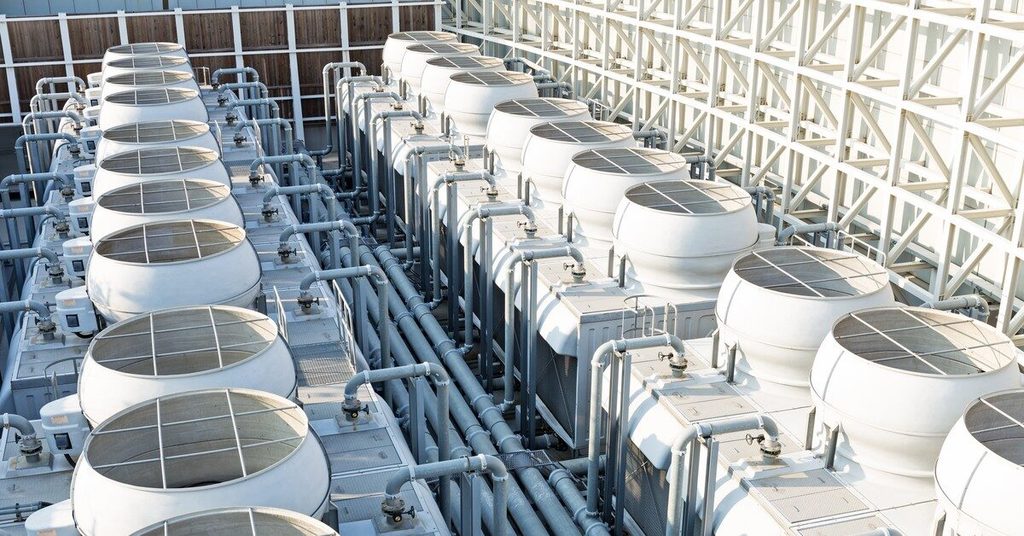
Should communities worry about data center water use?
The growth of the data center industry has been met with frequent criticism and political pushback, particularly due to its use of natural resources. One of those recurring criticisms concerns the amount of water that data centers use in their cooling systems.
Communities considering these facilities should want to know whether their arrival will strain local supplies or compete with existing users, especially in times of scarcity like during a drought. However, it’s just as important to have an accurate picture of how much data centers consume. Transparency and locally determined parameters for water usage are key to ensuring data centers are responsible, trustworthy neighbors.
Why do data centers need water?
In reality, water requirements for data centers can differ substantially. The computers inside a data center, similar to a personal computer but on a larger scale, generate heat as they store and process information. Water helps absorb the heat to prevent equipment from overheating. For example, some cooling systems use fans to move warm air across metal coils containing chilled water, which absorbs heat and carries it away. Others circulate cooling liquid through channels in metal plates attached directly to computer chips, collecting heat closer to its source. The amount of water a facility needs depends both on the facility’s size and how its cooling system works.
What’s the difference between evaporative and closed-loop cooling?
A key distinction is whether a data center uses evaporation to remove heat. In evaporative systems, water absorbs heat and some evaporates, requiring a continuing supply to replace it. Other systems circulate fluid through sealed loops and transfer the heat to outside air without evaporation, greatly reducing water needs.
How much water do Georgia data centers use?
Projects across Georgia illustrate a wide range of water usage. Microsoft estimates that its proposed Tyrone facility would use approximately 4,000 gallons of water per day once operational. For reference, a typical sit-down restaurant uses between 3,000 and 7,000 gallons daily. A compilation of development proposals submitted to the Southern Georgia Regional Commission by the Georgia Water Coalition, a statewide water-conservation advocacy group, lists daily water demand of 42,000 gallons for T5’s Lithia Springs project and 570,000 gallons for QTS’s Fayetteville campus. These projects obviously differ in size and design, and one facility’s requirements should not be treated as representative of the industry. However, the T5 and QTS data centers’ water usage puts them on similar levels as hotels and factories, respectively, which rarely draw the same kind of scrutiny for their usage of resources.
Is the water data centers use gone for good?
It’s also worth remembering that water in these cases is not necessarily all consumed. Some may be treated and returned to the original watershed, while water lost through evaporation is unavailable for immediate reuse. A facility’s total demand and its consumptive use therefore answer different questions.
How does a data center’s water use compare to farming?
It may also be useful to assess data centers in context with other operations that depend on water. Project Arrowhead, a proposed 1,205-acre data center campus in Irwin County, would include 18 buildings totaling 4.22 million square feet. In comments about the project, the Georgia Water Coalition estimated that an 80-acre irrigated field consumes about 26 million gallons annually. The campus’s projected annual consumption at full buildout is 7.3 million gallons. That would put its consumption at a little over one quarter of the hypothetical field’s estimated total, despite occupying a site roughly 15 times as large.
What did Virginia find about data center water use?
For more perspective, we can look outside of Georgia. Virginia’s legislative audit agency found that most data center buildings in its study used no more water than an average large office building. That benchmark was 6.7 million gallons annually, roughly 18,400 gallons per day, but some facilities used substantially more.
Virginia’s data centers used an estimated 2.1 billion gallons in 2023, with slightly more than one-third supplied by reclaimed wastewater. The audit placed data center water use at less than 0.5% of statewide withdrawals. Within individual water providers’ service areas, however, data centers accounted for between 0.2% and 21% of water use across the six systems studied, excluding reclaimed water. These figures show how much water these data centers used, but do not distinguish between water that was returned after use and water lost to evaporation or otherwise not returned to the original source.
Do data centers strain local water supplies?
The idea that data centers are a uniquely harmful strain on water supply does not hold up in comparison to other industries. However, data center facilities can still be substantial customers for the local systems serving them. A practical question for communities is how a proposed project fits alongside existing needs.
For a host community, the effect depends on where the water comes from, when it is needed and how much returns to the same water source after use. Annual averages can obscure seasonal pressures, particularly when hot weather increases cooling needs while drought reduces available supplies.
What should communities ask about a data center’s water use?
The arrival of data centers does not, by itself, signal an impending resource shortage or environmental crisis. Understanding their impact requires knowing how much water a facility expects to use during ordinary operations and periods of peak demand, whether that water comes from drinking-water supplies or reclaimed wastewater, and how much returns to the same watershed after use.
Facts like these provide a more useful basis for evaluating a project than treating data centers as uniformly water-intensive or assuming that a large gallons-per-day figure necessarily represents an unsustainable burden. Local governments and water utilities already assess water demand and infrastructure capacity when reviewing other development proposals, and data centers warrant the same scrutiny and transparency.
Will data centers use less water in the future?
One of the most effective prospects for managing these effects over time is continued innovation and investment in technology. More efficient cooling systems and equipment can reduce the resources required, and operators have a financial incentive to pursue those improvements because water and electricity are operating expenses. As technologies become more affordable and practical, more facilities can adopt them. Any assessment of data centers’ long-term impact should account for that potential for improvement alongside projections of growth.
How Much Electricity Do Data Centers Use, and Who Pays for It?
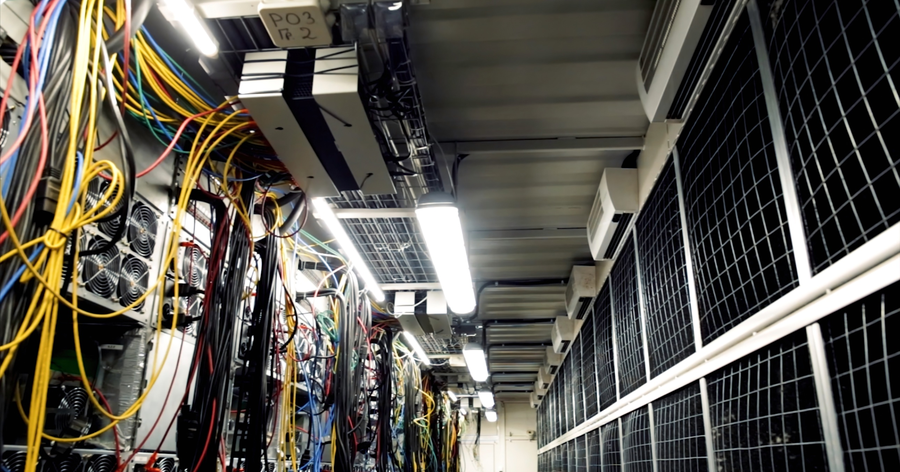
Data centers are frequently criticized for their consumption of resources. As discussed in our examination of water use, a facility’s size and cooling design can substantially affect its needs and its impact on local supplies. Another issue is energy use, which raises a different set of questions and challenges. Data centers facilitate services that are critical across the digital economy as well as in our daily lives. They have become a necessary piece of infrastructure, but it is important to have an accurate view of the scale and implications of their resource consumption.
Why do data centers use so much electricity?
Inside a data center, electricity powers the servers that process information, the equipment that stores it and the networks that move it between computers and users. Cooling systems also require electricity to remove the heat that equipment produces. Many of the services these facilities support must remain available around the clock, so their electricity needs continue after a typical business closes for the day.
Do all data centers use the same amount of power?
Those needs vary substantially by facility. A smaller data center obviously operates at a different scale from a campus supporting cloud services for millions of customers. Usage also depends primarily on how much equipment is installed, how heavily it is used and how efficiently the facility powers and cools it. The work being performed makes a difference, too. Hosting a small business’s website requires far less computing power than training an advanced artificial intelligence model, which can involve thousands of specialized chips working together.
How much of America’s electricity do data centers use?
As the industry grows, so too does its need for energy. In 2023, the Lawrence Berkeley National Laboratory estimated that data centers used about 4.4% of all electricity in the nation. Its updated analysis from June 2026 projects that their share could reach between 9.5% and 15.3% by 2030. While that range reflects significant uncertainty, it illustrates the scale of demand utilities are preparing to serve.
What’s the difference between megawatts and megawatt-hours?
For individual projects, electricity demand is often expressed in megawatts, which describe the rate at which a facility uses electricity. Megawatt-hours measure the total used over time, so a facility drawing 100 megawatts for one hour uses 100 megawatt-hours of electricity. A proposed campus’s advertised power capacity is not necessarily what it will draw continuously. Facilities may open in phases, and equipment may operate below its maximum capacity, so utilities must assess both how much power a project could require and how its actual demand will develop.
How much power do Georgia data center projects need?
T5 announced a data center campus in Palmetto, Ga., with a planned power capacity of up to 300 megawatts. Project Arrowhead, a proposed Irwin County campus, has an estimated peak electricity demand of 1,250 megawatts. For perspective, that would exceed the 1,114-megawatt generating capacity of Vogtle Unit 4, one of the plant’s four nuclear reactors. T5’s planned capacity is roughly equal to the power contracted for an aluminum smelter in South Carolina and about two-thirds of the projected demand of a new steel mill in West Virginia.
These figures describe planned capacity and projected peak demand, rather than continuous electricity use, but they illustrate why serving a large campus can require substantial investment beyond its property. Utilities must plan for enough generating capacity and the transmission infrastructure needed to deliver that power reliably.
Electricity usage presents a broad challenge as the data center industry grows, especially compared to water. This substantial demand for electricity makes the conversation about guardrails all the more important.
Will data centers raise my electric bill?
Lawmakers in Georgia and around the country have already taken steps toward managing the industry as it consumes power through cost allocation, or determining which customers pay for which portions of a utility’s expenses.
Electricity rates cover both the power that customers consume and the infrastructure needed to produce and deliver it. So, when a utility requires additional capacity or grid improvements, those new costs can affect everyone who gets an electric bill. Many citizens are concerned that, if a utility spreads costs related to data centers across its broader customer base, households and other businesses will pay more even though their own electricity use has not increased. But the reverse can also be true: A data center served by existing infrastructure can help spread fixed costs, reducing the share other customers must cover and lowering rates.
How is Georgia making data centers pay for their power?
Georgia’s Public Service Commission acted in 2025 to ensure data centers cover the additional costs they create. It approved rules allowing Georgia Power to apply additional contract requirements to new customers demanding more than 100 megawatts, including longer contracts and minimum billing requirements that ensure large customers cover the infrastructure investments needed to serve them. Qualifying contracts must also be submitted to the PSC for review.
Do data centers have to disclose their energy use?
Communities should also have access to information about a facility’s energy use, both in terms of expected demand and how its actual usage develops. California requires large data center buildings to report annual energy use publicly, while Texas requires disclosure to utilities of competing requests for electricity service that could change or cancel a proposed project, helping utilities avoid counting the same potential demand more than once.
Georgia lawmakers have considered similar transparency measures. Senate Bill 421, introduced in 2026 but not enacted, would have prohibited local governments and authorities from signing agreements that keep electricity and water usage information confidential.
What should Georgia expect from data center companies?
Georgia has an opportunity to set the standard for responsible growth. Companies seeking to build and invest in the state should expect clear rules about covering the costs of serving their facilities and providing transparent information about their energy consumption. Georgia can welcome investment and provision of the critical services data centers serve while establishing the terms under which the industry moves forward.
Where Should Georgia Data Centers Go? Land Use and Zoning Explained
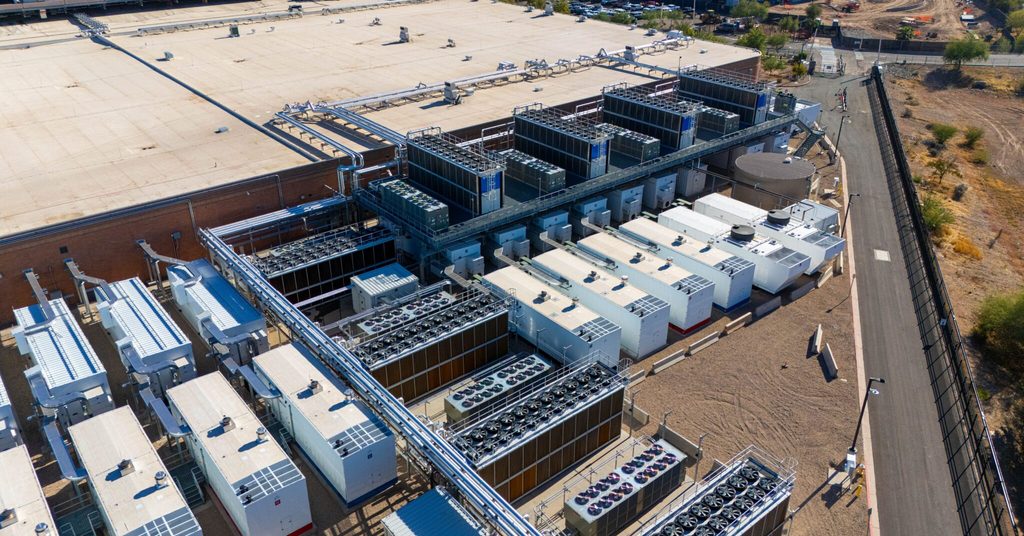
Another factor in data center development is land use, including what goes into decisions about where data centers are built, how sites are developed and how they affect surrounding properties.
What’s on a data center campus?
A data center campus may include server buildings, cooling equipment, backup generators and electrical substations, along with access roads and landscaped buffers. Its effects on neighboring properties depend on the arrangement of those features, the noise and light they produce and the distance separating them from homes.
How is a data center site built?
Developing a data center site involves similar work to other large commercial or industrial projects. Land may need to be cleared and graded before crews begin work such as laying foundations, connecting utilities and paving access roads. A campus’s total acreage can also include buffer zones, drainage areas or space for future expansion.
How much land does a data center need?
The buildings’ supporting systems—such as cooling equipment, backup generators and fuel storage—also occupy space. Large campuses may also include electrical substations, which reduce the voltage of incoming electricity so that it can be safely used on-site. The scale varies considerably: CoreSite’s CH2 facility in Chicago occupies a two-acre site in an urban area, DataBank acquired an 18-acre property near Atlanta for its ATL4 facility, T5 announced a 91-acre campus in Palmetto and Google’s proposed Project Raspberry in Virginia would occupy part of a roughly 344-acre parcel.
Do data centers need new power lines and utilities?
There is also infrastructure to account for beyond property lines. Data centers need fiber-optic connections to carry information, and many projects require extensions or upgrades to nearby utility networks. New power lines, substations or water and sewer connections can require construction beyond the campus. Expanded utility capacity has been a secondary benefit of the growth of the data center industry, but just like the sites themselves, new utility corridors can also require the disturbing of nearby properties. This all means that the land use question is broader than where to put server buildings, as it also concerns the infrastructure needed to keep them operating.
How does zoning decide where data centers go?
Local zoning is the most apparent means of deciding where data centers belong and how they should relate to surrounding properties. Ordinances establish standards for things like building height, setbacks and equipment screening. Where a proposal requires rezoning or a special-use permit, local officials can examine its compatibility with nearby uses and consider conditions addressing the site’s particular circumstances.
Where have local governments restricted data centers?
These decisions involve the larger question of how communities believe land can and should be used. Zoning can address conflicts between neighboring uses, but broad restrictions (not to mention overly difficult approval processes) can also discourage development in otherwise suitable locations. Atlanta’s city council, for example, approved restrictions in 2024 prohibiting data centers within a half-mile of high-capacity transit stops. Loudoun County, Virginia, the county with the most data centers in the nation, changed its rules in 2025 to require a special exemption to approve in zoning districts where data centers had previously been allowed by right.
Are data centers noisy?
One of the most immediate concerns for nearby residents is noise. Fans and other cooling equipment may operate around the clock, while backup generators add noise during testing and outages.
Do neighbors complain about data center noise?
A 2024 review by Virginia’s legislative audit agency found that most data centers did not generate noise complaints, largely because they either aren’t located close enough to residents to be a problem or have designs that limit how much sound reaches their neighbors. However, it identified at least 15 sites (about 10% of the state’s operating data center sites) where nearby residents considered the noise problematic. Noise at the facilities prompting complaints rarely exceeded local limits, so the concern was not necessarily excessive volume. However, some residents reported that its constant presence affected their well-being.
How can data center noise be reduced?
Greater separation from homes, quieter equipment and properly designed sound barriers can reduce the noise reaching neighboring properties. Sound studies before construction can identify potential problems, while testing after a facility opens can determine whether those predictions hold up. Loudoun County requires both pre-construction and post-construction noise studies, although the county acknowledges that its rules still lack standards specifically addressing tonal and low-frequency noise.
What other effects do data centers have on neighbors?
Other concerns are similar to those found in large development projects such as building size, lighting, tree removal and drainage, along with temporary construction impacts such as truck traffic, dust and noise. Setbacks and landscaping can soften visual impacts, for example, but screening a facility from view does not necessarily prevent its equipment from being heard.
What should data center zoning rules look like?
The development of data centers should include clear, predictable standards that protect neighboring properties while leaving suitable locations available for development. Identifying those locations and requirements in advance gives residents a clearer understanding of what may be built nearby and developers a clearer understanding of what will be expected of them.

Recent Commentary
Divided Government Comes to Georgia
Who’s Afraid of AI?
Literacy or Promise Scholarships? Georgia Doesn’t Have to Choose