
Last Friday marked Crossover Day in the Georgia legislative session, the point by which bills must clear their chamber of origin to remain viable. While legislation is never entirely “dead” and can still resurface as an amendment to another bill, it’s a good time to take inventory of where things stand under the Gold Dome with less than three weeks left in the session.
Tax policy has drawn plenty of attention this year, particularly a few proposals to cut or revise Georgia’s income and property taxes.
Heated debate over property taxes is nothing new in Georgia, and the House’s effort on that front did not make it through Crossover Day totally unscathed. Its original proposal to phase out property taxes on owner-occupied homes by 2032 required a constitutional amendment, a high bar that includes a two-thirds vote by lawmakers and ratification by Georgia voters.
After failing to muster two-thirds support for that ambitious proposal, the House instead passed a substitute version on Crossover Day that would limit growth in property tax revenue to the greater of 3% or the rate of inflation. The revised version of the bill also added a “Truth in Taxation” provision, which requires notification for all property owners when revenues will exceed the roll-back rate.
Read more in this week’s commentary.
– Kyle Wingfield
Friday’s Freshest 🗞️

https://www.georgiapolicy.org/news/why-is-georgia-unnecessarily-restricting-access-to-cancer-care/When it comes to cancer, time is the ultimate currency for both doctors and patients. Yet here we are in the midst of another legislative debate on whether incumbent providers, primarily hospitals, should have a “competitor’s veto” over additional access to care – even for treating cancer.
For four decades, the American regulatory state operated under a convenient, if constitutionally dubious, doctrine: that when a federal law was “ambiguous,” the tie went to the regulators. Changing this practice would require Georgia courts to decide questions of law without defaulting to an agency’s preferred interpretation.
In the running debate over Georgia’s inflated housing prices, there are the usual suspects: high interest rates, the cost of building materials, Wall Street investors. But while Georgians seek to assign blame for why “starter homes” are increasingly unattainable, a lesser known culprit remains the cost of time.
Data centers have been an integral part of energy infrastructure for much longer than they’ve been a ubiquitous topic in public policy conversations. But the rapid advance of artificial intelligence over the last few years has meant increased demand for more data centers.
Recently, President Donald Trump cheered many self-styled consumer advocates by saying that credit card interest rates should be capped at 10%, and later gave his backing to a proposal aimed at curtailing the power of Visa and Mastercard. Both proposals would in fact harm the very consumers they are intended to help, but their negative effects would go further.
Peach Picks 🍑

https://www.cbsnews.com/atlanta/news/yamaha-motor-corp-us-headquarters-california-kennesaw-georgia/After nearly half a century, Yamaha Motor Co. is moving its U.S. headquarters from California to Georgia. On Tuesday, Gov. Kemp announced that the Japanese company would be relocating to Kennesaw in the next few years.
After hitting a peak of $4.4 billion in 2022, spending on film and TV production in Georgia has tumbled, reaching just $2.3 billion in the last fiscal year, as total productions dropped from 412 in 2022 to 245 last year. The decline accelerated after the 2023 writers and actors strikes halted productions for months, dealing a blow to an industry still recovering from COVID-19 shutdowns.
The Georgia House of Representatives passed a 2027 fiscal year budget that includes $60 million for school literacy programs and $101 million more than last year for the Department of Corrections. The revenue estimate of $38.5 billion is $738 million, or 2%, more than the fiscal year 2026 budget, said Rep. Matt Hatchett, R-Dublin, chairman of the House Appropriations Committee.
The Senate passed a bill last week that would set up a system for Georgians to buy gold, store it in a depository and use a debit card to spend it on items such as fast food or milkshakes. Senators are selling gold as a hedge against inflation of the U.S. dollar, but skeptics say gold doesn’t necessarily protect hard-earned cash from rising prices.
Georgia continues to rank among the nation’s top destinations for movers and new data shows exactly where they’re landing. A recent analysis by StorageCafe, using U.S. Census data, highlights the top 10 Georgia counties for net migration, revealing clear patterns in who is moving and why.
Featured Report
Our Short Supply report describes consistent problems that hinder the production of affordable housing, as well as trends that contribute to the high demand that influences a shortage.

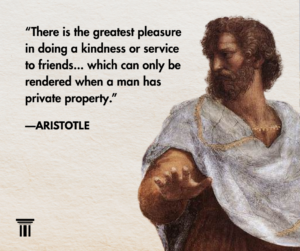
Quote of the Week 🌟
One More Fact 💡
Occupational licensing laws determine who is legally allowed to work in certain professions. While some licenses protect public health and safety, others can create costly and unnecessary barriers for people trying to earn a living.
A recent Reason article highlights an extreme example outside the Peach state. In Louisiana, individuals must complete at least 500 hours of training to braid hair professionally, and lawmakers are considering increasing that requirement. Yet traditional hair braiding typically does not involve chemicals or cutting tools that pose significant safety risks.
Requirements like these can discourage entrepreneurship and delay entry into the workforce. They can also create protectionist effects: licensing boards are often dominated by members of the regulated profession and strict mandates can function as government-enforced barriers that reduce competition.
The Foundation has long warned that occupational licensing can create unnecessary obstacles to work. Licensing has expanded dramatically nationwide over the past several decades, often without clear evidence that additional regulations improve consumer safety. Louisiana’s proposal serves as a cautionary tale of how licensing laws can drift far beyond their original purpose and end up limiting opportunity instead of protecting the public.