
Most people are probably aware that where they receive their healthcare affects the price. For example, treatment in an emergency room costs more than in a primary care physician’s office, even if the diagnosis in both places is a sinus infection.
But perhaps less intuitive is that the payment can change depending on who owns the healthcare facility.
Learn more in this week’s commentary.
– Kyle Wingfield
Friday’s Freshest 🗞️

In 1955, University of Chicago economist Milton Friedman drew a distinction that might sound obvious today but was radical then: A government’s role in financing education does not require a government monopoly on running schools. Society benefits when every child is educated — but while that may justify public funding, it does not justify limiting a child’s educational options to the nearest public school.
Restrictive licensing practices and regulatory barriers frequently prevent qualified and trained workers from participating in the workforce. This is true in Georgia as elsewhere, but a few bills passed in this year’s legislative session took aim at those barriers.
Congress recently passed a bill to tackle housing affordability. But despite the bill’s overwhelming bipartisan support, legitimate concerns remain about how much it will actually move the needle.
Rising insurance premiums for home and auto have long been attributed to the cost of Georgia’s legal landscape. For years, those bills kept climbing, and Georgia frequently ranked among the worst states for lawsuit abuse and excessive tort costs—until lawmakers decided to act.
Peach Picks 🍑

Motorists who purchase fuel in Georgia are seeing slightly lower prices, according to AAA. The cost of a regular unleaded gallon of fuel is $3.87, down a nickel from last week due to lower oil prices, the organization said.
Microsoft has been granted property tax breaks worth tens of millions of dollars for its data center projects across metro Atlanta. The Big Tech giant is now working to void those agreements.
Local and state officials, including Georgia Gov. Brian Kemp, joined hospital executives to cut the ceremonial ribbon for Wellstar Columbia County Medical Center in Grovetown, more than 12 years after Augusta University first asked the state formally for permission to establish the 100-bed facility.
When COVID-19 struck, schools closed, students “attended” from home, and too many got out of the habit of going to school when the doors reopened. In 2022, nearly a quarter of Georgia’s students had absenteeism rates high enough to be considered “chronic” — nearly double the rate before the pandemic.
Georgia Ports Authority CEO Griff Lynch said that in many organizations, leadership changes at the highest levels can result in some disruption. But in an industry as vast and fast-moving as global trade, GPA employees and customers experience enough disruption, he said.
Foundation Policy Analyst J. Thomas Perdue spoke with Fortune about Georgia’s data center tax exemptions amid Georgia Power’s 1,000-mile grid expansion. Noting that “the policy direction has clearly shifted,” Perdue explained that state and local governments bear the immediate cost of the exemptions through uncollected revenue—and that whether Georgians ultimately feel it through other taxes or reduced spending depends on subsequent budget decisions.
Featured Report 📊
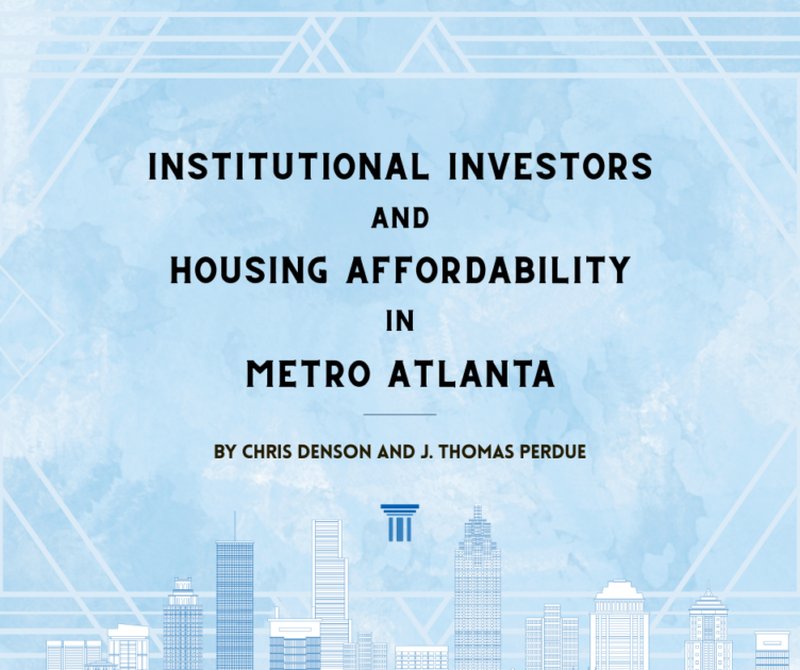
Institutional investors have become a central focus in debates over housing affordability in metro Atlanta, but the evidence tells a more complicated story. This report evaluates investor activity in context, showing how underlying housing shortages and post-recession policy changes have played a far larger role in shaping today’s market.
Quote of the Week 🌟
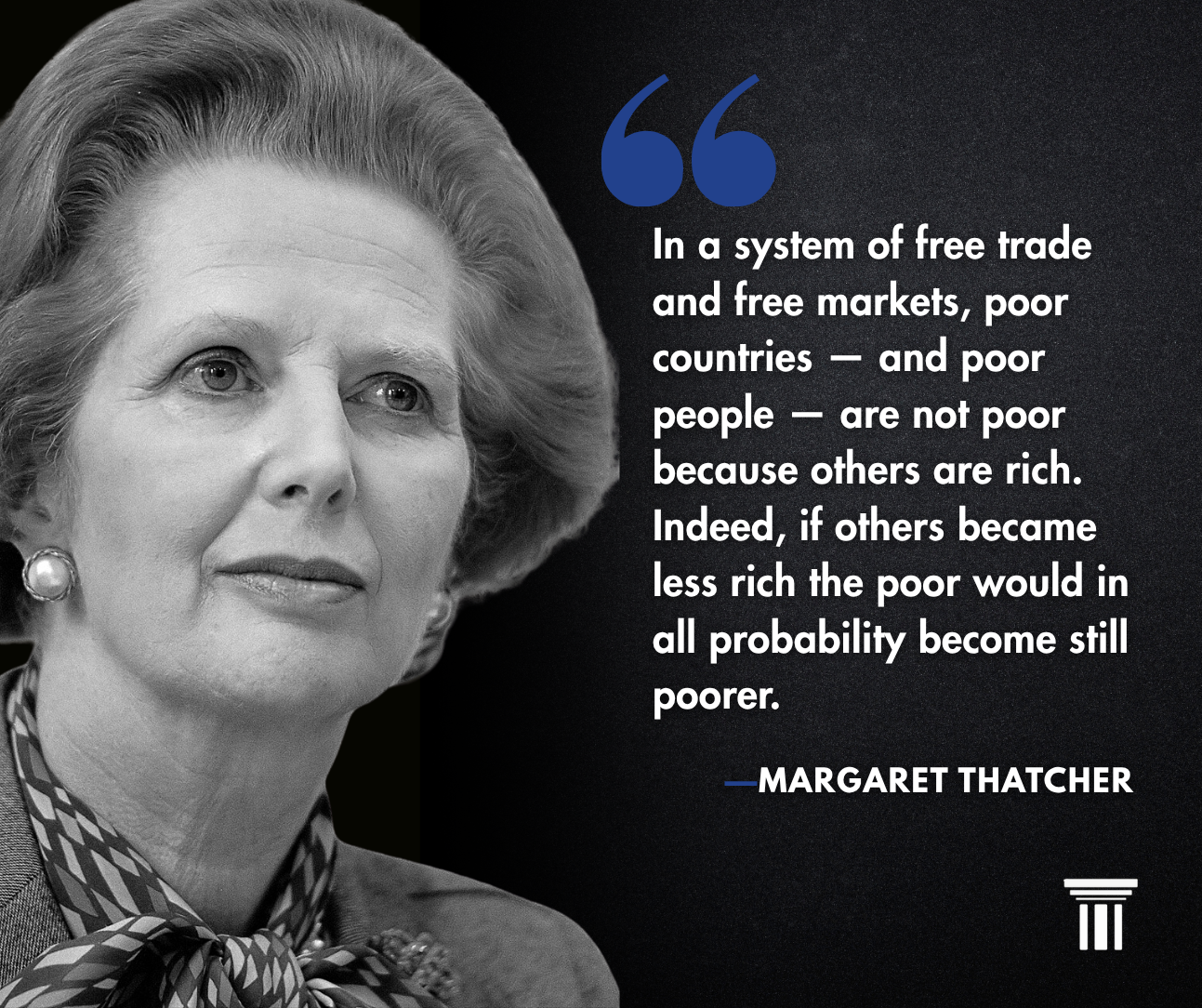
Margaret Thatcher understood a truth that remains central to sound economic policy: Prosperity is not created by making successful people poorer. Wealth in a free economy is not a fixed pie. It grows when people are free to work, invest, innovate, trade and build businesses that serve others.
Policies driven by envy may reduce inequality on paper, but they often do so by slowing growth, discouraging investment and limiting opportunity. The real measure of a healthy economy is not whether everyone earns the same amount, but whether more people can improve their lives through productive work.
Georgia should continue pursuing policies that expand economic freedom: lower taxes, fewer regulations, open competition and choice in education and employment. These reforms do not guarantee equal outcomes, but they give more people the chance to improve their lives.
The goal should not be to punish success. It should be to create more paths to prosperity.

More Commentary
To Tackle Affordability, Georgia’s Next Governor Should Start With Cutting Red Tape
Guide to the Issues 2026: Thirty years after the first edition
The Lesson Nikole Hannah-Jones Didn’t Mean to Teach