
In case you’ve driven through Georgia recently and wondered why the flags were at half-staff, they’re in honor of Dolly Parton.
While Dolly — “Mrs. Parton” feels like something better reserved for the pages of the New York Times — was most associated with the Smoky Mountains of East Tennessee, she married her husband in the northwest Georgia city of Ringgold in 1966. As stated in the governor’s executive order lowering the flags, the name reminded her of “rings of gold,” and she considered this a good omen for her marriage; she was married to Carl Thomas Dean for nearly 59 years before his death in 2025.
It’s fair to say that bond was matched by the public’s sentiment toward her. She earned that rarest of honors for those in public life: “no one ever had a bad word to say about her.”
But this is a column about the intersection of Georgia public policy and our daily lives, and for that, she did her best to address an issue that still requires attention today: improving childhood literacy.
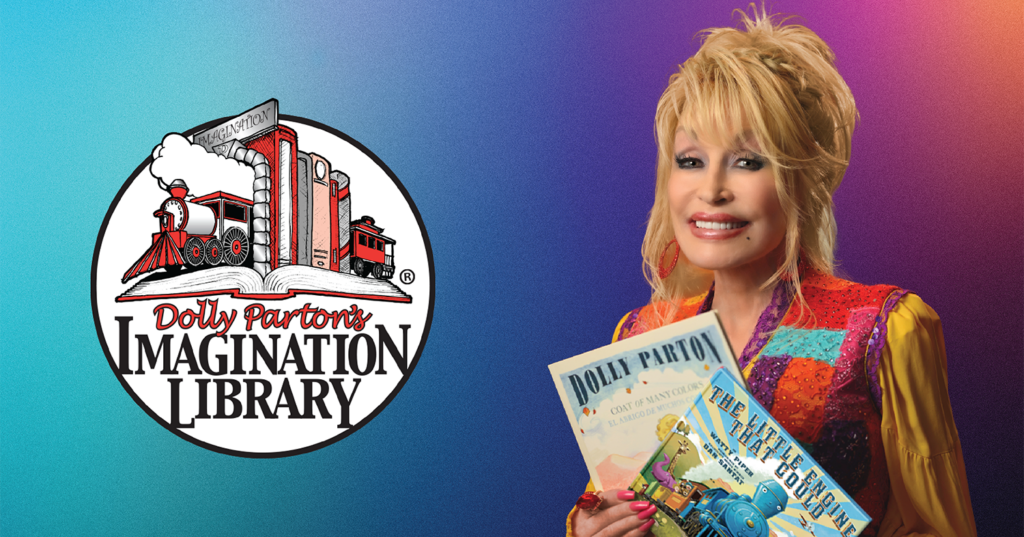
In the days after her death, many people have rushed to acknowledge how much they benefitted from her Imagination Library, a program that provides books free of charge to children from birth until age five.
The program began in 1995, distributing books only to children in Sevier County, Tennessee — famous, of course, for being both Dolly’s home county and the site of Dollywood.
In a 2018 interview with National Public Radio, she explained that the program was a way to honor her father.
“Well, my dad, as all my people, are very country people, mountain people, and my dad’s from a very large family. And as it was back in the mountains like that, a lot of kids had to work the fields and had to help feed the rest of the family. So my dad did not get a chance to go to school, and Daddy couldn’t read and write, and that was kind of crippling to him.”
Her father, who died in 2000, lived long enough to see the program spread beyond the borders of Sevier County. That same year, the Imagination Library began its expansion into a nationwide program — a milestone Dolly said meant everything to him.
“He got to hear the kids call me The Book Lady. He got a big kick out of that. But he took great pride and felt like he had helped do something special.”
By 2006, the Imagination Library had opened its first international program, in Canada, and now includes the United Kingdom, Australia and the Republic of Ireland.
That global reach is a testament to how universal the need is — and the numbers back home show just how far there still is to go.
Earlier this year, the Georgia Council on Literacy reported that a majority of Georgia’s third graders, 62%, are not reading proficiently.
Students who fall behind in reading that early are far less likely to graduate from high school. Sadly, Georgia’s literacy rate is roughly in line with the national average, highlighting the depth of this problem nationwide.
The General Assembly has spent several years working to address literacy rates. That effort culminated this year in the passage of House Bill 1193, the Georgia Early Literacy Act of 2026. The legislation expands the use of literacy coaches in every school with children from kindergarten through third grade. It also strengthens direction around early reading instruction and pushes earlier identification of students who are falling behind.
Addressing ongoing and systemic issues like childhood literacy will require collaboration from the public and private sectors alike. But one woman from East Tennessee did her best; at the time of her death, the Imagination Library had provided more than 300 million books to children around the world.

More Commentary
To Tackle Affordability, Georgia’s Next Governor Should Start With Cutting Red Tape
Guide to the Issues 2026: Thirty years after the first edition
The Lesson Nikole Hannah-Jones Didn’t Mean to Teach