
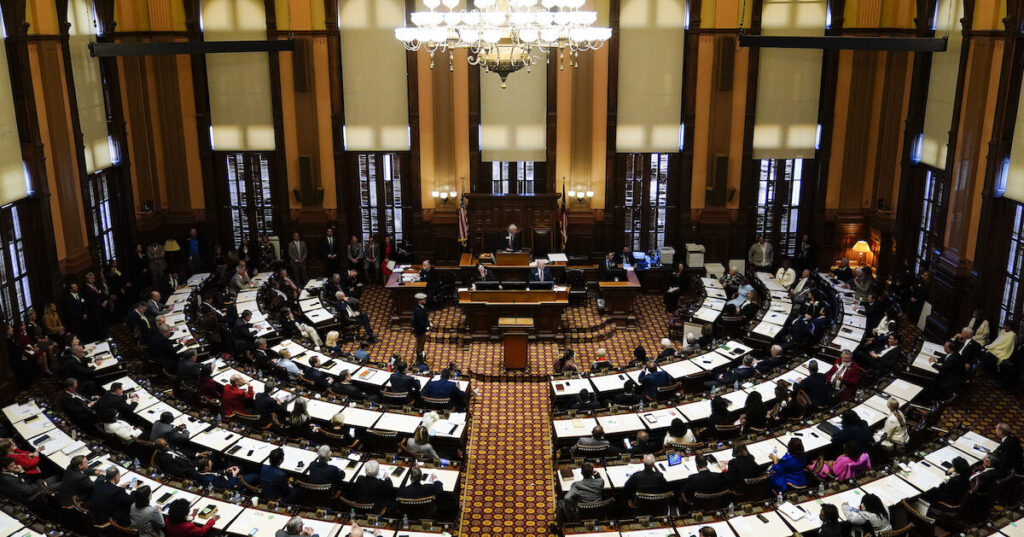
Despite the cold front persisting across Georgia, things are starting to heat up at the Capitol. Lawmakers spent much of the week in budget hearings and committee meetings, laying the groundwork for the major policy debates that will define this year’s session.
As the industry grows in Georgia, data centers continue to emerge as a headline at the legislature. Following last week’s bills aimed at revisiting the tax incentives that helped attract the industry, new legislation continues to roll in. Some lawmakers have pushed for increased transparency, which is the aim with Senate Bill 421, sponsored by Senator RaShaun Kemp. This would require local governments to disclose their data centers’ water and electricity usage.
Another popular topic is cost allocation. In addition to Senate Bill 34, which carried over from last year’s session and would prohibit data center power costs from being passed on to consumers, the House now has a bill intended to shield residential and retail electricity customers from costs associated with data center construction and operations. This is House Bill 1063, sponsored by Representative Brad Thomas; it effectively requires utilities to structure contracts and cost recovery so that data centers bear incremental infrastructure expenses.
Another recent bill on the topic was House Bill 1012, sponsored Representative Ruwa Romman, which outright bans the construction of new data centers until March of 2027.
Georgia lawmakers also continued to address the state’s growing regulatory code, with the introduction of these bills: House Bill 1078, sponsored by Representative Scott Hilton, would require periodic review and automatic sunset of state agency rules, forcing agencies to justify why each regulation remains necessary. House Bill 903, sponsored by Representative Alan Powell, would amend the Administrative Procedure Act to apply its oversight and procedural safeguards more broadly across the executive branch, increasing transparency and limiting agency discretion in rulemaking. By strengthening procedural requirements, the bill is intended to increase transparency and accountability in rulemaking across state government.
On the education front, this week saw the introduction of House Bill 1062, sponsored by Representative Carmen Rice, which would require the Georgia Department of Education to publish applicable federal guidance and related documents, making them readily available to the public and to the General Assembly. It also would mandate annual reporting from the State School Superintendent to legislative committees and the governor’s budget office, and authorize the State Board of Education to adopt rules implementing the transparency requirements.
The long anticipated House bill to eliminate property tax for homeowners was introduced this week. House Bill 1116, sponsored by Representative Shaw Blackmon, would exempt homesteads from local property taxes by allowing local governments and school systems to levy additional sales taxes. Revenue growth from non-exempt properties, such as commercial, industrial and non-homestead residences, would be capped at no more than 3% growth. The bill also proposes changes to both property and sales tax law and to education finance formulas, including provisions for how tax digests are accepted if publication errors occur and how certain tax exemptions are treated when calculating school property tax digest figures for state funding. It would also make related changes to local government budgeting and audit requirements.
Senate Bill 427, sponsored by Senator Ben Watson, seeks to address Georgia’s shortage of healthcare workers by creating a process for limited provisional licenses and a pathway to full medical licensure for certain internationally trained physicians.
For more updates from the Gold Dome, please be sure to subscribe to our weekly Friday Facts newsletter.
More Commentary
Political Ambition Meets Legislative Gravity: Georgia’s 2026 Session
Georgia won’t lower cost of housing until state tackles the ‘regulatory tax’
Major Education Bills Advance in Georgia Legislature as Session Nears End