
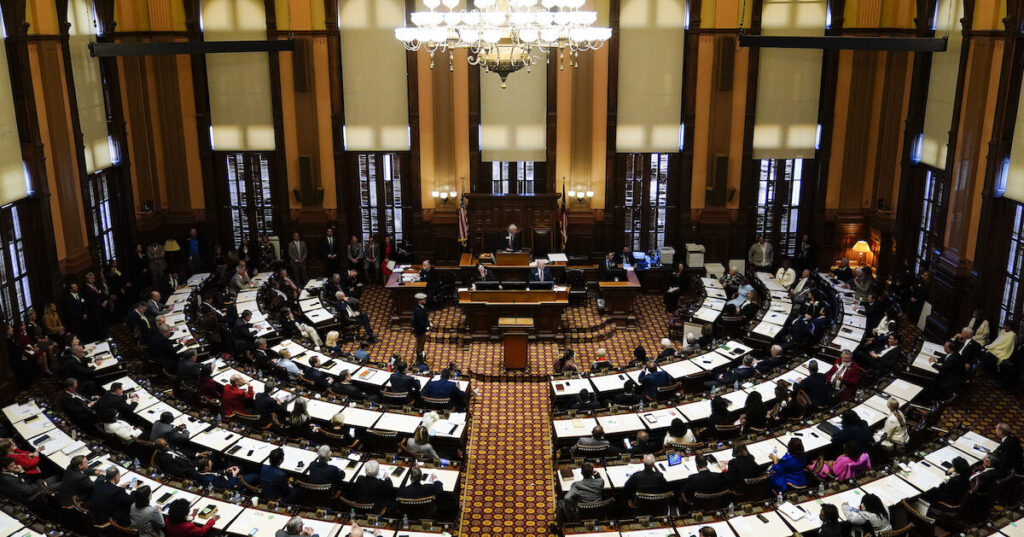
With the wrapping up of Sine Die early Friday morning, the 2026 Georgia legislative session has now come to an end. There’s a lot to unpack from the final two legislative days, so while this week’s commentary will cover the entire session in retrospective, here’s an update on some of what passed and what was left behind at the final gavel.
After late-session tension between the House and Senate, lawmakers finalized a $38.5 billion FY 2027 budget on Sine Die. Some of the spending plan’s priorities include early literacy, expanding services for Georgians with disabilities and employee retirement funding.
On the topic of early literacy, both chambers agreed and passed House Bill 1193, the Georgia Early Literacy Act, on Tuesday. This bill, introduced by Rep. Chris Erwin, would expand statewide literacy efforts by providing for literacy coaches in every public school with early grades, requiring readiness assessments and kindergarten attendance before first grade, creating new literacy leadership positions and revising literacy screening and professional learning requirements.
HB 1193’s passage was arguably the most consequential result in education policy from this year’s session. While Senate Bill 445 (a cleanup bill for the Promise Scholarship Act) and Senate Bill 498 (which would have established the Georgia Charter Schools Authority to assist charter schools with financing) both passed their chamber of origin, they did not come to a vote on the House floor.
Both chambers did agree, however, on raising the annual cap on available tax credits for contributions to student scholarship organizations (SSOs). Sponsored by Rep. Kasey Carpenter, House Bill 328 raises the cap from $120 million to $150 million.
Tax policy was one of the highest priority issues for legislators this year. For much of the session, the primary vehicle for property tax reform was House Bill 1116, sponsored by Rep. Shaw Blackmon. It went through a series of changes, starting as a bill to phase out property taxes on owner occupied homes by 2032. This approach changed after its related constitutional amendment (HR 1114) failed to pass the House. A revised version of the bill—which limited growth in tax revenue among other things—passed the House on Crossover Day, but it was voted down by the Senate on Sine Die. After HB 1116 failed, SB 33 became the session’s final property-tax bill after lawmakers repurposed it on Sine Die to authorize an optional local 1% sales tax for homestead property-tax relief and added some related taxpayer-protection rules.
The session’s major income tax cut bill was House Bill 463, sponsored by Rep. Shaw Blackmon. It would reduce Georgia’s flat income tax rate to 4.99% for 2026 and then continue phasing it down to 3.99% as early as 2034, while also increasing the standard deduction and other tax benefits. This bill also implements a Taxpayer Relief Fund, which raises the state’s Revenue Shortfall Reserve from 15% to 20% to provide for future taxpayer relief.
Sine Die also saw the passage of House Bill 1247, the Georgia Bureaucratic Deference Elimination Act. Sponsored by Rep. Matt Reeves, this legislation would require Georgia courts to make rulings without defaulting to a state agency’s preferred interpretation when ambiguity exists between a regulated party and the agency’s interpretation of the law. The amended version of the bill also added additional language that would require Georgia agencies to periodically review their rules and regulations, including their impact, cost and effectiveness.
Finally, the legislature passed a key permitting reform bill in Sen. Clint Dixon’s Senate Bill 447. This is meant to ensure that permit applicants receive clear and timely reasons when their permits are denied. It revises how counties and municipalities may accept, reject or deny permit applications and requires local permitting authorities to provide applicants with a written explanation of any rejection. It also requires local governments issuing more than 250 permits per year to create a “real time” dashboard on permit status. It should be noted also that this bill includes a location-specific carveout for Paulding County and its surrounding counties, exempting that area from the bill’s provisions related to permit timelines.
For a comprehensive review of the 2026 session, make sure to check out this week’s commentary, as well as more post-session news and updates in Georgia policy in our weekly Friday Facts newsletter.
More Commentary
Georgia won’t lower cost of housing until state tackles the ‘regulatory tax’
Major Education Bills Advance in Georgia Legislature as Session Nears End
The Fight Against Red Tape Continues in Georgia