
Data centers have become one of Georgia’s most contested land-use questions, and much of the fight has centered on water.
The American Enterprise Institute’s Daniel Lyons argues that focus is misplaced. Direct water use by data centers nationwide amounts to a fraction of a percent of the country’s supply — a rounding error next to agriculture — and cooling designs are getting less thirsty.
The electricity question is the serious one, but data centers didn’t break the grid so much as expose it: Two decades of permitting rules and baseload retirements left little room to grow across much of America.
Read more in this week’s commentary.
– Kyle Wingfield
Friday’s Freshest 🗞️

Most people are probably aware that where they receive their healthcare affects the price. But perhaps less intuitive is that the payment can change depending on who owns the healthcare facility.
In 1955, University of Chicago economist Milton Friedman drew a distinction that might sound obvious today but was radical then: A government’s role in financing education does not require a government monopoly on running schools. Society benefits when every child is educated — but while that may justify public funding, it does not justify limiting a child’s educational options to the nearest public school.
Restrictive licensing practices and regulatory barriers frequently prevent qualified and trained workers from participating in the workforce. This is true in Georgia as elsewhere, but a few bills passed in this year’s legislative session took aim at those barriers.
Congress recently passed a bill to tackle housing affordability. But despite the bill’s overwhelming bipartisan support, legitimate concerns remain about how much it will actually move the needle.
Peach Picks 🍑

While metro Atlanta is adding thousands of new residents, population growth is slowing, hampered by housing supply, a new study found. The 11-county metro added 53,690 residents between April 2025 and April 2026 — the slowest pace of population growth in more than a dozen years, according to a report released Wednesday by the Atlanta Regional Commission, the metro area’s planning agency.
Gov. Kemp announced that Siemens is planning to create more than 1,400 jobs at its new advanced manufacturing facility in Pendergrass over the next three years. The project represents at least $185 million in investment in Jackson County, pending final approvals.
The Georgia State Board of Education voted Wednesday night to recommend suspension of the Dublin City School Board after a day of testimony about the school system’s financial woes. The decision whether to suspend the board will be up to Gov. Brian Kemp, who will receive the board’s recommendation in the next 15 days. If Kemp suspends the board, he can appoint new members to serve.
Georgia tax revenue continued rising in July, bolstered by strong receipts from the sales and use tax, which sent more money to local governments. Net tax collections were $2.57 billion, up $78.1 million from July 2025.
Potbelly, a chain known for toasted submarine sandwiches, salads and milkshakes, is set to launch its first Georgia restaurant Sept. 1. It marks the beginning of a broader expansion in the metro Atlanta region that will span at least 15 restaurants, a mix of company-owned and franchise locations, according to a Potbelly spokesperson.
In the Media 📺
The Valdosta Daily Times republished a commentary by Foundation Director of Policy and Research Chris Denson on why Medicare pays more for the same care depending on who owns the building. He looks at a new CMS proposal to extend site-neutral payment to imaging services — a change the agency estimates would save Medicare and beneficiaries $260 million in its first year, including roughly $70 million in out-of-pocket costs for seniors.
Featured Report 📊

Institutional investors have become a central focus in debates over housing affordability in metro Atlanta, but the evidence tells a more complicated story. This report evaluates investor activity in context, showing how underlying housing shortages and post-recession policy changes have played a far larger role in shaping today’s market.
Quote of the Week 🌟
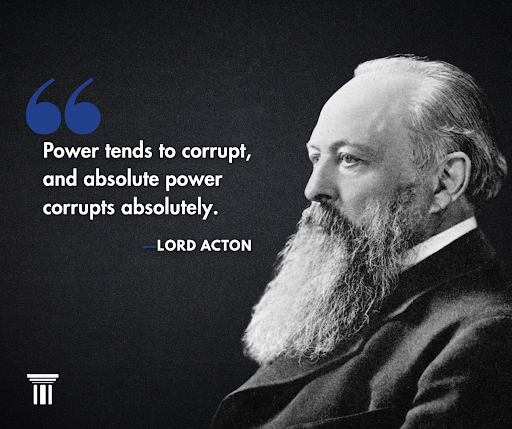
“Power tends to corrupt, and absolute power corrupts absolutely,” Lord Acton famously warned. His point remains relevant because government power, even when created with good intentions, can expand far beyond its original purpose.
That is why constitutional limits, checks and balances, transparency and accountability matter. They are not obstacles to effective government; they are safeguards for citizens. When authority is concentrated in too few hands, mistakes become harder to correct, special interests gain influence and individual liberty can erode.
A healthy system of government recognizes that public officials are human and therefore fallible. The answer is not to search for perfect leaders, but to build institutions that limit what any leader can do.
For Georgia, that means continuing to favor policies that keep government focused, restrained and accountable. Protecting freedom requires more than trusting those in power. It requires ensuring that power itself remains limited, regardless of who holds office.

More Commentary
To Tackle Affordability, Georgia’s Next Governor Should Start With Cutting Red Tape
Guide to the Issues 2026: Thirty years after the first edition
The Lesson Nikole Hannah-Jones Didn’t Mean to Teach