
Restrictive licensing practices and regulatory barriers frequently prevent qualified and trained workers from participating in the workforce. This is true in Georgia as elsewhere, but a few bills passed in this year’s legislative session took aim at those barriers.
A license is essentially the government’s permission to work, and in any state concerned with growth, prosperity and freedom, it should be one of the last regulatory tools considered. The burden should fall on the government to demonstrate that a restriction addresses a genuine danger and that a less restrictive alternative is not plausibly available.
We take a look at these new laws in this week’s commentary.
– Kyle Wingfield
Friday’s Freshest 🗞️

Congress recently passed a bill to tackle housing affordability. But despite the bill’s overwhelming bipartisan support, legitimate concerns remain about how much it will actually move the needle.
Rising insurance premiums for home and auto have long been attributed to the cost of Georgia’s legal landscape. For years, those bills kept climbing, and Georgia frequently ranked among the worst states for lawsuit abuse and excessive tort costs—until lawmakers decided to act.
The Declaration of Independence was the most revolutionary act of our revolutionary generation. Not because the document’s signers risked everything by doing so, though they did. Not because it opened a new epoch, though it did. But rather, because it sparked a change in human thought, behavior and expectations that continues to unfold 250 years later.
In the ongoing debate over why homeownership remains out of reach for so many Georgia families, we have the usual explanations: higher interest rates, institutional investors buying up homes, global supply chain disruptions and the rising cost of labor. But an updated study from the National Association of Home Builders puts a new dollar figure on the cost of government regulations nationwide.
Peach Picks 🍑

June unemployment rates increased for all of Georgia’s regional commissions, but it is normal for this time of year, according to the Department of Labor. Most regional commissions experienced an increase of five-tenths of a percentage point, according to statistics released by the department on Thursday.
House lawmakers are setting up the broad strokes for new measures meant to tackle some of the state’s most pressing healthcare issues in the 2027 legislative session. Agencies in charge of Medicaid, insurance, hospitals, infectious diseases and mental health treatments take up a sizable chunk of Georgia’s taxpayer-funded budget, totaling about $32.9 billion of the state’s $76.5 billion budget with state and federal funds.
Rising fuel prices are putting new financial pressure on Georgia trucking companies as diesel costs continue to climb. The national average for a gallon of gas has climbed back to about $4, up 13 cents from a week ago, while diesel prices are approaching $5 a gallon, according to AAA.
OpenAI said it intends to build a $20 billion data center in an industrial park in mostly rural Effingham County, about a 30-minute drive from Savannah’s downtown. The data center is projected to employ 400 workers in six-figure jobs when it opens in 2028 and increase to 1,000 employees by 2032.
People spent more money on the Georgia Lottery over the past year than the prior one, sending more than $1 billion to public educational programs for the 11th year in a row. The more than $1.5 billion raised during fiscal year 2026, which ended June 30, exceeded the prior fiscal year profit by nearly $70 million, according to Gov. Brian Kemp’s office.
Featured Video 🎥
In this video, the Georgia Public Policy Foundation examines housing data across metro Atlanta to better understand the role of institutional investors in the housing market. While large investors do participate in the market and receive significant attention in the media, the data reveals a more complicated story.
Quote of the Week 🌟
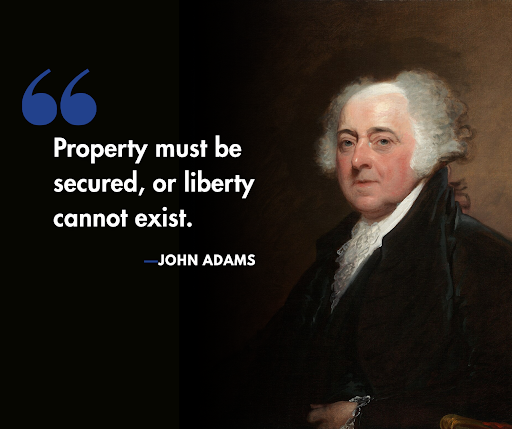
“Property must be secured, or liberty cannot exist,” John Adams wrote in 1790. His point remains relevant today. Property rights give individuals the freedom to build, invest, save and shape their futures. They provide the stability communities need to grow and prosper.
Property rights can be weakened not only by outright seizure, but also by rules that make ownership harder, more expensive or less useful. Restrictive zoning, unnecessary permitting delays and excessive regulations can raise housing costs and limit the supply of homes. When that happens, families have fewer choices, younger workers struggle to buy and communities become less accessible.
Protecting property rights means more than defending what people already own. It also means removing unnecessary barriers that prevent others from becoming owners. A free society should make it easier for people to build, buy and improve property.
More Commentary
The Lesson Nikole Hannah-Jones Didn’t Mean to Teach
You’ve Already Used a Data Center Today
What I Tell My Children About 9/11