
Georgia continues to grapple with a complex, outdated and steadily expanding regulatory environment. Debates over the state’s regulatory burden, including proposals such as the “Red Tape Rollback Act” introduced last year, are not occurring in isolation. They reflect a broader national movement in which states are reassessing long-standing regulatory structures that constrain economic growth and stifle innovation.
Since the publication of our initial 2025 overview of regulatory reform efforts, legislatures and governors across the country have advanced new reforms aimed at trimming individual rules and rebalancing power between unelected bureaucratic agencies and legislatures. The details vary by state, but common goals include greater legislative oversight for approval of high-cost regulations, clearer economic accountability and an unwinding of regulations that have accumulated over the years.
One major trend has been the growing use of systematic reviews of existing regulations, along with other tools aimed at curbing regulatory growth. Across the country, states are adopting targeted reductions of specific rules, implementing sunset and review mechanisms to eliminate outdated regulations, strengthening legislative oversight of high-cost rules and improving transparency and predictability through measures such as standardized permitting timelines and clearer guidance requirements.
Learn more about this in this week’s commentary.
– Kyle Wingfield
Friday’s Freshest 🗞️

The 2026 legislative session marks both an endpoint and the eventual transition to come. As with the 2018 session before it, the final year of the legislative cycle and a term-limited governor will bring the prevailing political order to a close, ultimately altering the proceedings and priorities of the legislature.
Rising property taxes in Georgia continue to dominate kitchen table conversations around the state. As such, expect proposals to rein in property taxes to be at the forefront of the 2026 legislative session.
For over a decade, the push for educational freedom was spearheaded at the state level by advocates and policy makers. The landscape of the school choice movement will change significantly in January 2027, when the first federal tax credit scholarship goes into effect.
Washington remains focused on whether to extend COVID-era Obamacare subsidy add-ons. Democrats demanded these supposedly temporary subsidies be extended, leading to the recent government shutdown.
The 50-year mortgage idea recently floated by the Trump administration grows out of the same motivation of the 30-year mortgage of the 1930s—to make home ownership more accessible to people who would otherwise be renters.But today, the main barrier is not how we finance homes—it’s that we don’t build enough of them.
Peach Picks 🍑
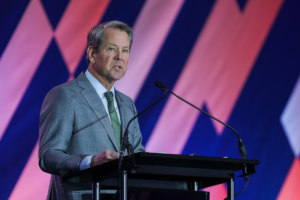
Gov. Kemp proposed another tax rebate, a $2,000 pay supplement for state employees and a new need-based college scholarship in his final State of the State address. The $1 billion tax cut pitched mirrors one from 2025 that gave single filers $250 and married filers $500.
The Republican leaders of Georgia’s Senate will push to reduce both income and property taxes while targeting other cost-of-living issues during a legislative session that will be influenced by election-year politics. Senate leaders gave a brief outline of their priorities at the Capitol Tuesday, the second day of their 40-day session.
Gov. Kemp delivered his final State of the State speech on Thursday — but it may not have been a farewell. He’s supporting candidates for the legislature and other statewide offices who adhere to his small government agenda and he’s pushing to keep Georgia’s taxes low to fuel the state’s economic growth.
The Georgia Department of Insurance is ordering nearly two dozen health insurance companies to pay fines totaling $25 million for breaking state laws requiring them to cover mental health claims the same way they cover physical health. Since August, when the violations were initially announced, investigators assessed $5 million more for offenses, and additional fines were levied for not responding to inquiries in a timely manner.
Gov. Kemp wants to spend $1.8 billion to unclog one of traffic-choked Atlanta’s notorious chokepoints on the most important highway between the Midwest and Florida. While some states have turned to transit and other options, Kemp says Georgia has to keep building highways to promote economic growth in Atlanta, Georgia’s economic engine.
Quotes of Note 🌟
“It’s not whether you get knocked down, it’s whether you get back up.” – Vince Lombardi
“I have not failed. I’ve just found 10,000 ways that won’t work.” – Thomas Edison
“Give every man thy ear, but few thy voice.” – Shakespeare, Hamlet
One More Fact 💡
Families across the country are feeling the squeeze of a housing market that has become increasingly unaffordable, with first-time buyers and renters alike struggling to find homes within reach of their incomes. President Trump recently stated his desire to ban large institutional investors from buying single-family homes—framing it as a way to make homeownership more accessible for everyday families.
But our recent report finds that institutional investors are not the primary cause of the affordability crisis. The deeper and more persistent driver is a chronic shortage of housing, rooted in restrictive zoning, lengthy permitting processes and other regulatory barriers that limit new construction and slow the expansion of supply. By constraining how many homes can be built, these policies intensify competition for a limited number of units, allowing prices and rents to rise regardless of who is doing the buying. The report concludes that meaningful improvements in affordability will require reforms that make it easier to build more housing, rather than focusing narrowly on the identity of investors in an already constrained market.

More Commentary
Guide to the Issues 2026: Thirty years after the first edition
The Lesson Nikole Hannah-Jones Didn’t Mean to Teach
You’ve Already Used a Data Center Today