
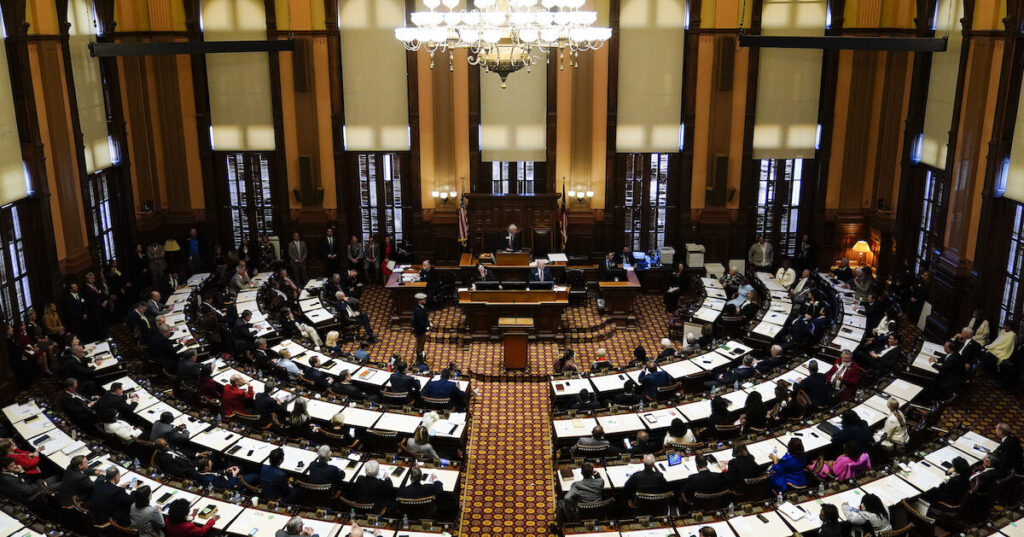
Crossover Day has finally come, meaning any bill that didn’t pass out of its chamber of origin by Friday isn’t going to… though they could always resurface as a “rider” on some other bill that has passed out of one chamber. With now less than one month left in this year’s Georgia legislative session, here’s an update from a pivotal week at the capitol.
The Senate passed a bill aiming to limit activity from institutional investors. Senate Bill 463, sponsored by Sen. Greg Dolezal, would restrict large-scale ownership of single-family residential properties in Georgia by limiting a “business enterprise” to owning no more than 500 single-family homes. Companies currently above this threshold would not be required to divest their holdings. This bill also prohibits foreign investment vehicles from owning single-family homes intended to be used as rental property.
Also in the housing sphere, Senate Bill 447, sponsored by Senator Clint Dixon, is a permitting-process reform bill that passed the Senate on Tuesday. This bill seeks to ensure permit applicants receive clear and timely reasons when their permits are denied. It revises how counties and municipalities may accept, reject or deny permit applications and requires local permitting authorities to provide applicants with a written explanation of any rejection.
The Senate also passed a construction-permitting bill focused on private plan review. Senate Bill 437, sponsored by Sen. Clint Dixon, would let permit applicants use a private professional provider to conduct plan reviews or inspections and allow that work to proceed even if the local government has not completed its own review yet, while still leaving final permit approval with the local authority.
On the education front, the Senate advanced a follow-up to the Georgia Promise Scholarship law. Senate Bill 445, sponsored by Sen. Greg Dolezal, updates how the state identifies eligible schools by specifying that public schools with a statewide attendance zone and certain charter schools would not be included in the Office of Student Achievement’s separate list used for Promise Scholarship purposes.
Also in education, Friday saw the passage of Senate Bill 498, sponsored by Sen. Clint Dixon. This bill would establish a Georgia Charter School Facilities Authority to help charter schools finance school buildings and major facility projects. It’s designed to expand access to low-interest revolving loans and other public financing tools for construction, renovation and rehabilitation and also authorizes the Georgia State Financing and Investment Commission to issue general obligation bonds to support charter school facilities.
This session has seen several efforts to address issues related to data centers, and one of them, Senate Bill 410, sponsored by Sen. Matt Brass, passed the Senate Friday morning. This would repeal Georgia’s state sales and use tax exemption for data center equipment going forward, while grandfathering exemption certificates issued before the repeal so existing projects can continue using them.
Meanwhile, the House took up the broad question of who decides what Georgia laws mean. House Bill 1247, sponsored by Rep. Matt Reeves, passed the House on Wednesday and would bar courts and administrative hearing officers from deferring to a state agency’s interpretation of the constitution, statutes, regulations or sub-regulatory materials, requiring judges to exercise independent judgment instead.
The House also voted to further reduce Georgia’s income tax with the passage of House Bill 880, sponsored by Rep. Shaw Blackmon. This is a multi-year income tax rate reduction, cutting Georgia’s individual rate by 0.10 percentage points per year starting in 2026, until the rate reaches 3.99%, but pausing any scheduled cut in years when specified revenue and reserve conditions aren’t met. It phases in bigger tax breaks starting in 2027 and raises the cap on Georgia’s Revenue Shortfall Reserve.
Finally, the House moved a separate piece of tax relief. House Bill 1000, sponsored by Rep. Matthew Gambill would establish a one-time income tax credit for individual taxpayers who filed Georgia income tax returns for both the 2024 and 2025 tax years by the filing deadline, including extensions, and it passed the House this week.

More Commentary
Literacy or Promise Scholarships? Georgia Doesn’t Have to Choose
The Three Constitutional Amendments on Georgia’s 2026 Ballot
To Tackle Affordability, Georgia’s Next Governor Should Start With Cutting Red Tape