
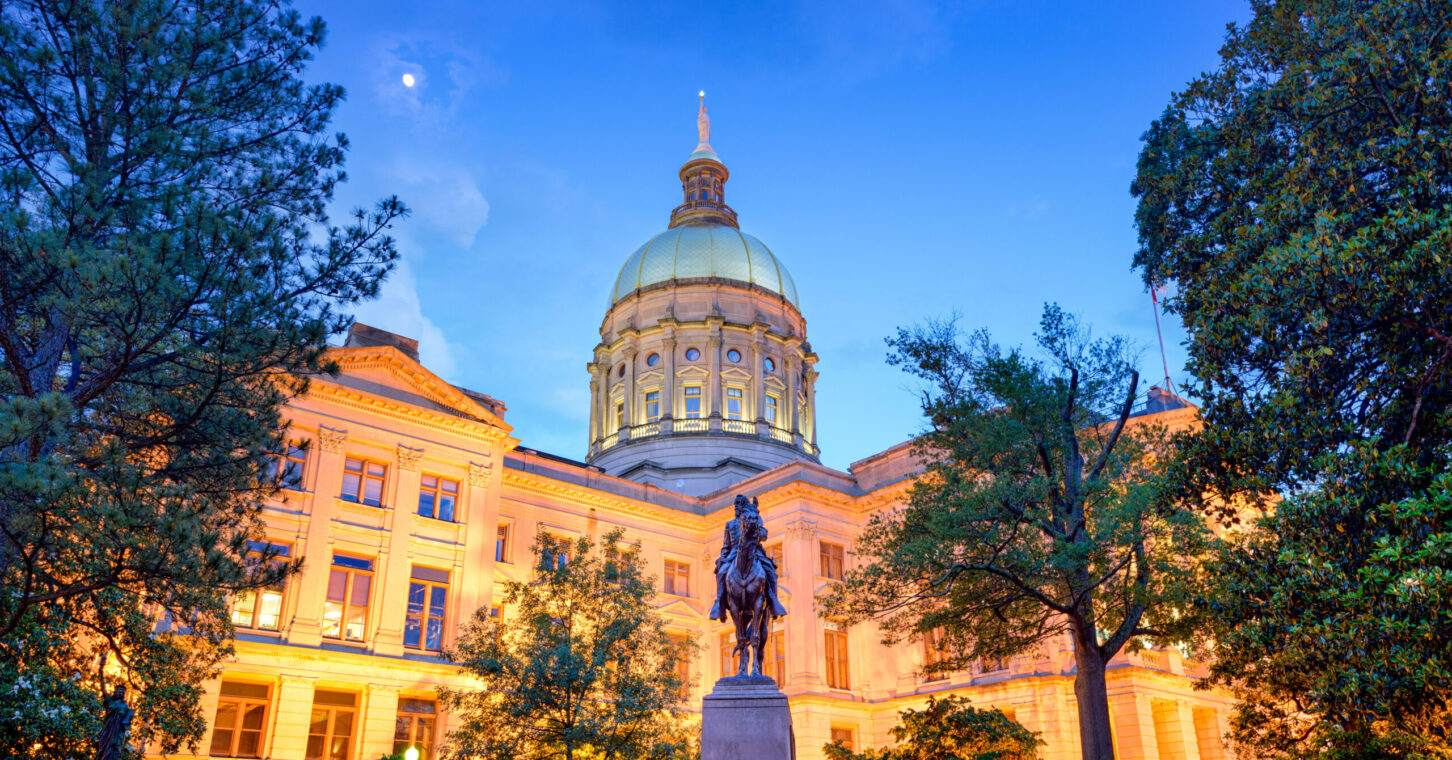
The 2026 legislative session marks both an endpoint and the eventual transition to come. As with the 2018 session before it, the final year of the legislative cycle and a term-limited governor will bring the prevailing political order to a close, ultimately altering the proceedings and priorities of the legislature.
An open seat at the top also typically creates additional opportunities down ballot, as statewide officials, state legislators and members of Congress jockey for higher office.
Tensions between the House and Senate, a permanent fixture in Georgia politics even in years without an election, unfold more routinely in public.
“If we’re going to take off every other year for people to run for office, then maybe we just ought to not have a session during an election year,” then-House Speaker David Ralston said ahead of the 2018 session.
As in 2018, we enter the session with a lieutenant governor who has announced his candidacy for governor. Whereas in 2018, Lt. Gov. Casey Cagle faced off against Secretary of State Brian Kemp and State Senator Hunter Hill, among others, in the Republican primary, this election will feature Lt. Gov. Burt Jones, Attorney General Chris Carr and Secretary of State Brad Raffensperger.
Eight years ago the Democratic primary for governor featured two former members of the Georgia House in Stacey Abrams and Stacey Evans; it’s a much more crowded field this time. Former Atlanta Mayor Keisha Lance Bottoms, former DeKalb County CEO Mike Thurmond, former State Senator Jason Esteves, State Rep. Ruwa Romman, State Rep. Derrick Jackson and Geoff Duncan, the former Lieutenant Governor of Georgia as a Republican, are among the candidates announced so far.
The classic maxim of Georgia politics in an election year is “expect a short session so legislators can get out and start raising money.” This is because they are prohibited from raising money during the legislative session.
However, one key difference between now and 2018 is the creation of leadership committees, which enable the governor, lieutenant governor and caucus leaders in both chambers to raise money during the traditional blackout period for fundraising.
Even if there is a certain sense of normalcy within this widespread turnover, much has changed in the state since then. For starters, almost 700,000 new residents have moved to Georgia in the past eight years, a period which also includes the social and economic effects of the COVID-19 pandemic.
The state budget that came out of the 2018 session was a then-record $26.2 billion. By comparison, Georgia is currently operating under a $37.7 billion state budget.
Despite the state’s fiscal health, it’s obvious that voters aren’t feeling as good when it comes to the cost of living. As such, affordability is already a primary theme of this session (and political campaigns) in a way it wasn’t in 2018.
When Georgians went to the polls in November 2018 to decide between Brian Kemp and Stacey Abrams for governor, Americans’ confidence in the economy was roughly 60 points higher than it is today, according to the Gallup Economic Confidence Index.
Legislators have already started working on ways to cut income taxes, property taxes and costly regulations; bills to address additional economic issues like the cost of housing and monthly energy bills could follow.
The Georgia Senate Special Committee on Eliminating Georgia’s Income Tax recently completed their work, with resulting legislation to lower the state’s income tax rate anticipated shortly. House Speaker Jon Burns has stated his chamber will examine ways to eliminate property taxes on homesteads.
The revenue offsets legislators will have to determine for those two priorities are consequential and will have wide-ranging policy implications. It’s a good time to remember that – as our former chairman and CEO, the late Rogers Wade, used to say – while good policy makes good politics, the reverse is not always true.