
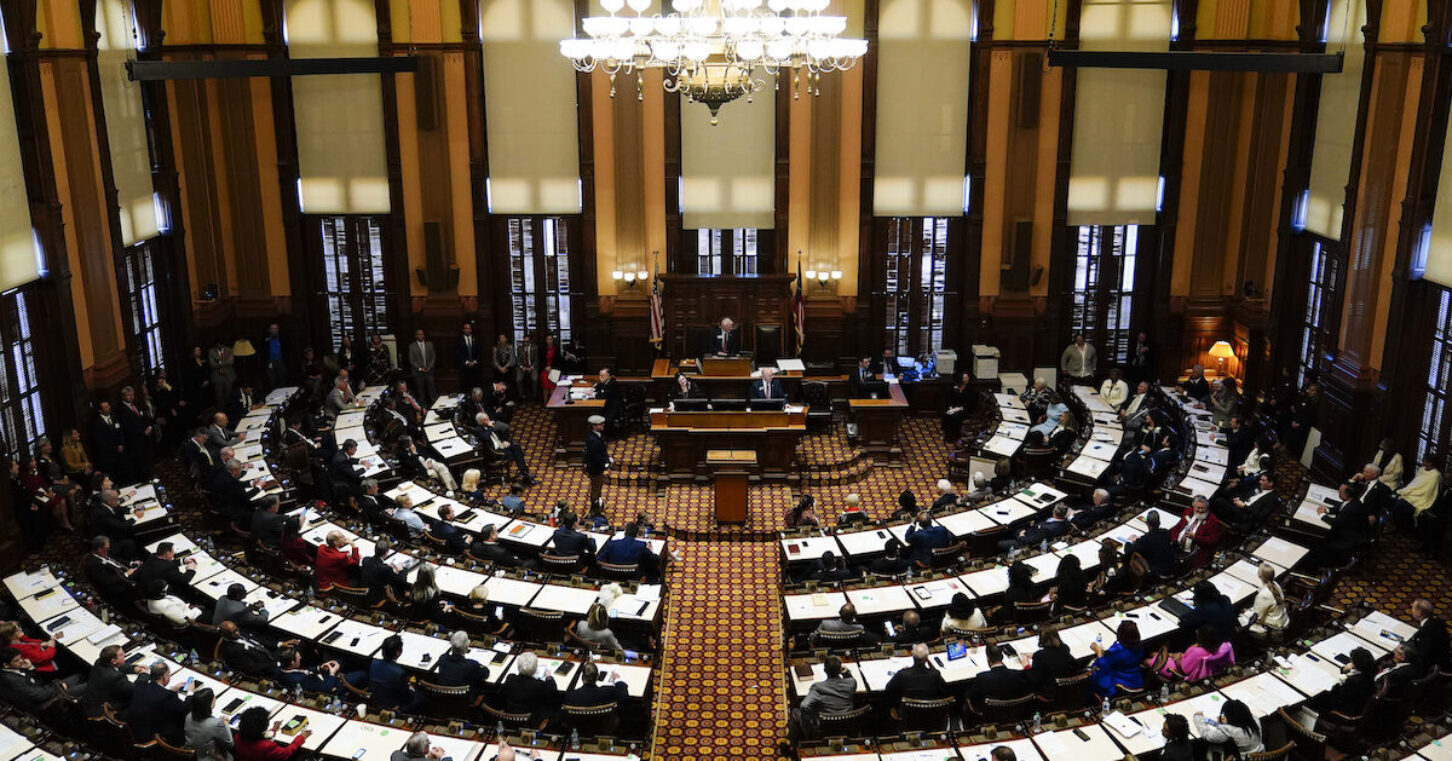
It was an abbreviated legislative week as the nation celebrated President’s Day on Monday, but we still saw the movement of key legislation continue, as the push toward Crossover Day continues.
Here’s an update on what happened at the capitol this week:
Georgia lawmakers continue to advance proposals that reevaluate the state’s posture toward data centers. The Senate Finance Committee debated a series of bills which would rein in data center tax breaks, noting that the exemptions now cost the state roughly $1.5 billion a year in foregone revenue. However, no action was taken this week.
The other chamber did see movement on this topic, as House Bill 1063, sponsored by Representative Brad Thomas, passed the House. This bill would require electric utilities to use contracts with new large data centers that are designed to shield residential and other retail customers from the costs of serving those facilities, including protections if a data center defaults or leaves early.
A couple of notable bills related to housing made it out of their respective committees this week. Senate Bill 447 passed out of the State and Local Governmental Operations Committee and Senate Bill 463 passed out of Economic Development and Tourism. Senate Bill 447, sponsored by Senator Clint Dixon, is a permitting-process reform bill that seeks to ensure permit applicants receive clear and timely reasons when their permits are denied. It revises how counties and municipalities may accept, reject or deny permit applications and requires local permitting authorities to provide applicants with a written explanation of any rejection.
Senate Bill 463, introduced by Senator Greg Dolezal, deals with institutional investors, a popular and highly debated issue in Georgia over the past few years. This bill would cap business ownership at 500 homes with some exceptions. It also would bar certain foreign investors from owning single-family rental homes.
On the healthcare front, the Senate passed a bill on Friday that would establish a pathway for limited provisional licences and eventual full licensure for certain internationally trained physicians, with hopes of addressing the state’s physician workforce shortage. This is Senate Bill 427, sponsored by Senator Ben Watson.
In the House, a recently-introduced bill to exempt certain certificate of need requirements, House Bill 1292 introduced by Representative Spencer Frye, has been assigned to the House Health Committee. This bill would add a new CON exemption for certain veterans’ nursing homes, specifically intermediate care or skilled nursing facilities owned or operated by the Department of Veterans Service.
The House passed House Bill 987, also known as the “Voluntary Portable Benefit Plan Act,” sponsored by Representative Todd Jones. It would create a legal framework for portable benefit plans for independent contractors, allowing self-employed workers access to worker-owned benefits like health, PTO and retirement accounts while preserving independent status. It’s been assigned to the Senate’s Insurance and Labor Committee.
This week saw more movement on charter schools legislation, as the Senate passed Senate Bill 369, sponsored by Senator Shawn Still. This would amend Georgia’s Charter Schools Act to create a specific category for dropout recovery charter schools, including rules for converting existing charter schools and setting separate performance standards for these schools.
And finally, the House Committee on Governmental Affairs passed the “Georgia Bureaucratic Deference Elimination Act,” which would end Chevron-style judicial deference at the state level by creating a new code section directing that courts and administrative hearing officers may not automatically defer to a state agency’s interpretation of Georgia laws, regulations or other official documents when making decisions. This is House Bill 1247, sponsored by Representative Matt Reeves.