
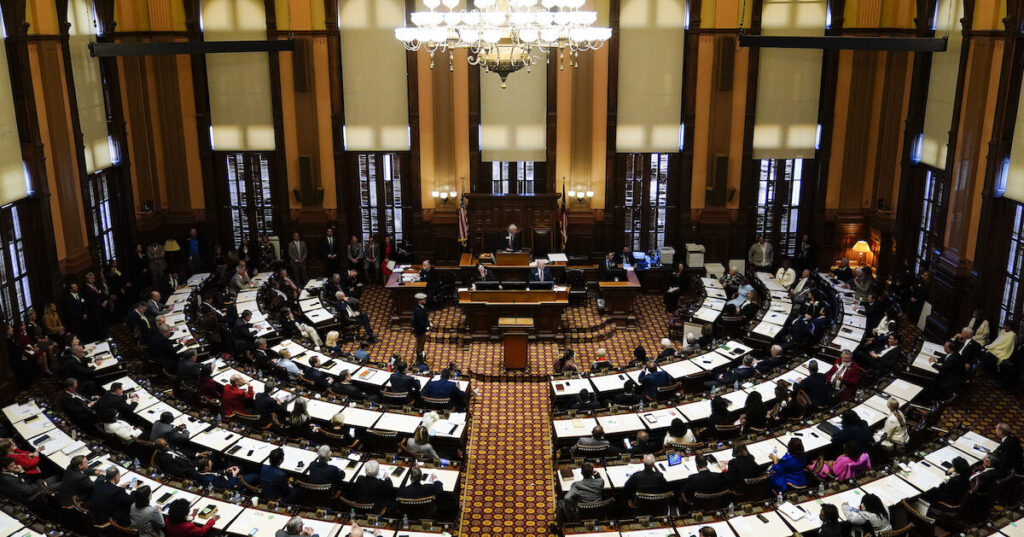
The Georgia legislative session rolls into its fourth week, and now that we’re on the other side of a winter storm, things are busier than ever. The House approved its amended budget for the current fiscal year, which now heads to the Senate.
Here’s an update on what else happened at the capitol this week.
House Republicans introduced a legislative agenda called the Georgia Families First initiative, which is a package of bills and fiscal appropriations to address family issues, including access to affordable child care, health care for women and children, expanded paid maternal leave and community safety.
Multiple bills in both chambers were introduced on the education front. Senate Bill 445, sponsored by Sen. Greg Dolezal, would adjust reporting requirements for the Georgia Promise Scholarship program by excluding certain public schools with statewide attendance zones and some charter schools from the list used in annual reporting of eligible schools. Senate Bill 446, sponsored by Sen. Clint Dixon, would codify Georgia’s participation in the new federal education tax credit program created under the federal “One Big Beautiful Bill Act.” Gov. Brian Kemp announced last month that the state had officially opted into the program, which allows donors to receive federal tax credits for contributions to scholarship-granting organizations, and goes into effect on January 1, 2027.
In the House, House Bill 1135, sponsored by Rep. Scott Hilton, similarly would provide for Georgia to participate in the federal tax credit program and designate the state revenue commissioner to make the necessary election and report to the U.S. Treasury. House Bill 1193, sponsored by Rep. Chris Erwin and known as the Georgia Early Literacy Act of 2026, would expand statewide literacy efforts by providing for literacy coaches in every public school with early grades, requiring readiness assessments and kindergarten attendance before first grade, creating new literacy leadership positions and revising literacy screening and professional learning requirements
This week also saw movement on a few housing bills, one being Senate Bill 437, sponsored by Sen. Clint Dixon. This would allow applicants for building, plumbing or electrical plan reviews to use a private professional provider to conduct them and have that work recognized in place of review by a city or county. After being introduced last week, this bill received its first committee hearing on Thursday. Senate Bill 447 seeks to ensure permit applicants receive clear and timely reasons when their permits are denied. It revises how counties and municipalities may accept, reject or deny permit applications and requires local permitting authorities to provide applicants with a written explanation of any rejection.
Tax policy continues to be a dominant issue in the early stages of this session. The Senate passed Senate Bill 382, sponsored by Sen. Chuck Hufstetler. This bill would make the statewide homestead property tax cap mandatory for all local governments and school districts, removing the option for communities to opt out of limits on how much assessed home values can rise year-to-year. The bill cleared the Senate by a 31-19 vote and now heads to the House for further consideration.
And finally, in healthcare, Senate Bill 367, introduced last year by Sen. Bill Cowsert, received a hearing in the Senate. This bill would carve out a specific exemption from Georgia’s Certificate of Need laws for all cancer-related care, with supporters saying it could reduce regulatory barriers to expanding cancer treatment capacity.
Senate Bill 427, sponsored by Sen. Ben Watson, moved forward this week, passing unanimously out of the Senate Health and Human Services Committee. This bill would establish a pathway for limited provisional licenses and eventual full licensure for certain internationally trained physicians, with hopes of addressing the state’s physician workforce shortages.